Categories
Blog

#MVP | Baseball is a Mental Game…What in the heck does that even mean?

We all laugh at the Yogiism…

  • “A nickel ain’t worth a dime anymore.”
  • “Nobody goes there anymore. It’s too crowded.”

Hopefully you realized I was talking about the hall of famer and not the cartoon character!
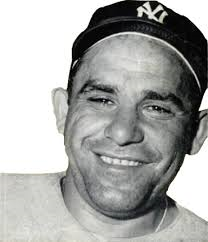
Yogi Berra

I am certainly not asking you to spend too much time on what Yogi said, but once you get done laughing, possibly making fun; You start to realize what he meant. Some might agree it makes a lot of sense, but I will save that for another blog.

Today I am more focused on the fact we say and accept baseball statements without giving them much thought. We take the generic road, blurting out things and then if it works, as we are smelling our own perfume, we assume it’s right. Well as Lemony Snicket said, “Assumptions are dangerous things to make…” But isn’t that what we do when we say, Baseball is a Mental Game?

The assumption is repeated over and over again like a broken record; Listen up guys, the mental side of baseball is some percentage value [e.g. 80%, 85%, 90%] of the game! Unfortunately for most the motivation words is about as far as it goes because everyone seems willing to accept the fact, “We are never going to practice it.”

I get it, practicing the mental game is such an imperceptible thing its easy to understand why most teams and players view taking more grounders or another round of BP as the next best thing. So, I posed the question to the late Dick “Schoonie” Schoonover and without hesitation he said, “Tai Chi.” He credits Tai Chi to the success he had performing over 10,000 pitching lessons with quality pitchers like Eric Milton, Dustin Hermanson, and Micah Owens.

“Think about it,” Schoonie said, “whether you are at the plate or on the hill you want your athlete to have smooth mechanics and composure.” Lemony Snicket aside I admit the first picture that came to my mind was a bunch of elderly people in the park. Practicing what I preach, I needed to look at Tai Chi differently. I needed to truly UNDERSTAND before I make my decision.

Graceful: The more I researched Tai Chi, the more I understood Schoonies’ Tai Chi straightaway response. In a Living Well article “Tai Chi: Medication in Motion,” Mark Fuerst stated “Tai Chi can…make body movements more graceful and efficient…” Isn’t that how we describe the best-of-the-best in baseball; “he plays this game so smooth and graceful.”

Thinking without Thinking: When describing the mindfulness of Tai Chi Dr. Peter Wayne, assistant professor of medicine at Harvard Medical School referenced Tai Chi as providing “honesty with what is… awareness without trying to fix it or improve it.” Strikes are an outcome of good mechanics and focus more on hitting the baseball versus dictating where it has to end up.

The more I read, the more I listened the more I agreed. So whether you are looking for a particular player, or you want to be that particular player I am sure you will agree having the ability to play this game with a composed, graceful, and as Nike would say, “Just Do it,” attitude then I recommend you consider making Tai Chi part of your work out regiment. After all Yogi said, “Baseball is ninety percent mental and the other half is physical.”

Here are some Most Valuable Player Recommendations:

  1. The Handbook for Success by Glenn Moore
  2. Pick up Tai Chi Video to workout with at home
  3. Focus on What he says, not how he says it and Check out the YouTube interview of Dr. Peter Wayne [It’s a playlist of several videos] discussing Tai Chi.  I especially like “What does mindfulness mean in the context of Tai Chi? https://www.youtube.com/playlist?list=PL81149085C781D0D6

Until next blog,

Head-Shot-for-Newsletter-Smaller

Al McCormick

Categories
Blog

#MVP | Perseverance; Does this Describe How You Play the Game?

http://vimeo.com/88582779

I know it definitely is synonymous with Corey Overholtzer.

After listening to what Corey has to say, I am sure you will agree, “if there is a player who was made to succeed it is him.”

Here are the two links I promised in the video!

First: Have a son who is in High School or, maybe he is play Junior College baseball looking to find a four school, then sign up for College Recruitment in a Box Today!

Second: We know baseball has evolved into a hitting-pitching game, which is why “Hitting is Simple…Have You Figured it Out Yet?” is for both the pitcher and the hitter.

  • Pitchers need to learn how to pitch to players who truly know how to hit.
  • Positional Players are judged by how well they can hit, so use it to become the best hitter you can be!

If you have any questions, suggestions, or any recommendations for future blogs send me a note by Clicking HERE.

Sincerely

Head-Shot-for-Newsletter-Smaller

Al McCormick


Categories
Blog

#MVP | Turning a Double Play From First

Got to love a clean 3 – 6 – 4 double play. Pumping your team up while deflating your opponent. True beauty when done correctly!

Hiccup and you have just given the opposition two extra outs and likely will end up with a runner on first and third. Waking up your opponent while potentially second guessing yourself in the field.

So why does either scenario allow emotion to creep into what I believe is a true mental game? Sadly it is because teams, their coaches, and the fans are surprised when it is performed correctly. Most will tell you it fails because it’s a difficult play, but I believe it fails because most first baseman don’t know the right way to turn a double play.

Not surprising when practice is catching a grounder, pivoting their feet, and making an accurate throw. I could make an argument calling it practice is kind of a misnomer; many players and coaches are just relieved when they finally execute it. Success is basically performing it robotically, fielding the ball, pivoting, and throwing to second base. Disregarding the two most important factors in successfully completing the 3 – 6 – 4 double play: The Angle and Decision Making.

How many times have you witnessed the first baseman emulating the robotic fashion used during practice; catching the ball and without thought throwing and hitting the runner in the middle of the back. Worse, their attempt to avoid hitting the runner and have the ball end up in the outfield as the runner heads to third.

Once the pitcher commits to throwing home the first baseman has to move from a position of holding the runner on to stepping towards the infield and preparing to make a play in the field. Placing them in a position to line their throw to second at an Angle from the infield avoiding the runner altogether.

Check out this short clip.
http://vimeo.com/87340331
The Decision Making focuses on whether you can turn the double play or not! Practice must help a first baseman mentally establish a gauge they can use to determine if it makes sense to throw to second or not. A gauge capable of reacting immediately to how hard the ball is hit when the runner takes off. Sometimes getting one out makes the most sense (e.g. a runner is stealing and gets a great jump).

Sign up for a Video Analysis today. Baseball is an individual sport in a team concept, which is why I recommend every player (High School and College) get evaluated every year. An unbiased opinion identifying the small things we need to work on can truly be a difference maker!

Until next Blog,

Head-Shot-for-Newsletter-Smaller

Al McCormick

Categories
Blog

#MVP | Parents and Coaches, Don’t be Skerd, it’s Just a Colonoscopy

I am pretty certain you all have heard all the pros and cons of having a Colonoscopy, but in the end..sorry, let me reword that, reading humor columnist Dave Barry’s Colonoscopy experience probably won’t persuade you, but I did find it pretty factual and FUNNY.

By Dave Barry

… I called my friend Andy Sable, a gastroenterologist, to make an appointment for a colonoscopy. A few days later, in his office, Andy showed me a color diagram of the colon, a lengthy organ that appears to go all over the place, at one point passing briefly through Minneapolis.

Then Andy explained the colonoscopy procedure to me in a thorough, reassuring, and patient manner. I nodded thoughtfully, but I didn’t really hear anything he said, because my brain was shrieking, quote, ‘HE’S GOING TO STICK A TUBE 17,000 FEET UP YOUR BEHIND!’

I left Andy’s office with some written instructions, and a prescription for a product called ‘MoviPrep,’ which comes in a box large enough to hold a microwave oven. I will discuss MoviPrep in detail later; for now suffice it to say that we must never allow it to fall into the hands of America’s enemies.

I spent the next several days productively sitting around being nervous. Then, on the day before my colonoscopy, I began my preparation. In accordance with my instructions, I didn’t eat any solid food that day; all I had was chicken broth, which is basically water, only with less-flavor.

Then, in the evening, I took the MoviPrep. You mix two packets of powder together in a one-liter plastic jug, and then you fill it with lukewarm water. (For those unfamiliar with the metric system, a liter is about 32 gallons.) Then you have to drink the whole jug. This takes about an hour, because MoviPrep tastes – and here I am being kind – like a mixture of goat spit and urinal cleanser, with just a hint of lemon.

The instructions for MoviPrep, clearly written by somebody with a great sense of humor, state that after you drink it, ‘a loose watery bowel movement may result.’ This is kind of like saying that after you jump off your roof, you may experience contact with the ground. MoviPrep is a nuclear laxative. I don’t want to be too graphic, here, but: Have you ever seen a space-shuttle launch? This is pretty much the MoviPrep experience, with you as the shuttle. There are times when you wish the commode had a seat belt.

You spend several hours pretty much confined to the bathroom, spurting violently. You eliminate everything. And then, when you figure you must be totally empty, you have to drink another liter of MoviPrep, at which point, as far as I can tell, your bowels travel into the future and start eliminating food that you have not even eaten yet.

After an action-packed evening, I finally got to sleep. The next morning my wife drove me to the clinic. I was very nervous. Not only was I worried about the procedure, but I had been experiencing occasional return bouts of MoviPrep spurtage. I was thinking, ‘What if I spurt on Andy?’ How do you apologize to a friend for something like that? Flowers would not be enough.

At the clinic I had to sign many forms acknowledging that I understood and totally agreed with whatever the heck the forms said. Then they led me to a room full of other colonoscopy people, where I went inside a little curtained space and took off my clothes and put on one of those hospital garments designed by sadist perverts, the kind that, when you put it on, makes you feel even more naked than when you are actually naked.

Then a nurse named Eddie put a little needle in a vein in my left hand. Ordinarily I would have fainted, but Eddie was very good, and I was already lying down. Eddie also told me that some people put vodka in their MoviPrep. At first was ticked off that I hadn’t thought of this, but then I pondered what would happen if you got yourself too tipsy to make it to the bathroom, so you were staggering around in full Fire Hose Mode. You would have no choice but to burn your house.

When everything was ready, Eddie wheeled me into the procedure room, where Andy was waiting with a nurse and an anesthesiologist. I did not see the 17,000-foot tube, but I knew Andy had it hidden around there somewhere. I was seriously nervous at this point. Andy had me roll over on my left side, and the anesthesiologist began hooking something up to the needle in my hand. There was music playing in the room, and I realized that the song was ‘Dancing Queen’ by Abba.

I remarked to Andy that, of all the songs that could be playing during this particular procedure, ‘Dancing Queen’ has to be the least appropriate. ¡You want me to turn it up?’ said Andy, from somewhere behind me. ‘Ha ha,’ I said. And then it was time, the moment I had been dreading for more than a decade. If you are squeamish, prepare yourself, because I am going to tell you, in explicit detail, exactly what it was like.

I have no idea. Really. I slept through it. One moment, Abba was shrieking ‘Dancing Queen! Feel the beat from the tambourine …’ and the next moment, I was back in the other room, waking up in a very mellow mood. Andy was looking down at me and asking me how I felt. I felt excellent. I felt even more excellent when Andy told me that it was all over, and that my colon had passed with flying colors. I have never been prouder of an internal organ.

 ABOUT THE WRITER

Dave Barry is a Pulitzer Prize-winning humor columnist for the Miami Herald

Until next blog,

Al McCormick

Categories
Blog

#MVP | JUCO Baseball – For many it’s The Right Choice

“Be honest;” did you view Junior College as:

  • A place for kids who had lousy grades
  • The education is not as good because it is cheaper, or
  • Kids who go to junior college are those who have no interest in school, they go there because they don’t know what they want to do?

If you step back and take a look the benefits of Junior College my guess many of you will change your thoughts. My guess some may even say Junior College is the smarter choice.

I am guessing you would agree the two most important factors in making a decision is:

  1. Research and organize as much information as you can
  2. Weigh the “Risk versus Reward” 

With those factors in mind let me offer some things to consider regarding your son Academically, Socially, Financially, and Athletically.

Academically – I think you agree whether Macbeth is being taught at a 4 year or 2 year, it’s still Macbeth! If you focus only on transferrable classes [e.g. English 101, 102, Comps, Social Sciences, Sciences…]a JUCO will place you in the driver seat. An athlete needs 48 transferrable credit hours into a major at the 4 year school, so make sure you pick electives like Psychology versus Photography.

Socially – JUCO’s are not overwhelming. Class sizes are similar to high school, which I believe most will find manageable versus 500 kids in an auditorium watching a talking head and papers being passed out by a grad assistant.

Financially – JUCO’s in the $3000 to $6000 versus $30,000/year at a four-year institution. On top of that some JUCO’s still offer full rides, which is pretty non-existent from four-year schools.

Athletically: This is another area I believe JUCO’s excel. Most start practice the moment they arrive smoothing a player’s transition from high school to college baseball. On top of that, most play 25-30 games in the fall with the opportunity to get drafted after your freshman year versus waiting until after your junior year.

Ryan Kassab is an example of someone who used JUCO to get what they wanted. Instead of reacting, Ryan took a proactive approach to the college recruitment process [Read More on the Proactive Approach]. 

Athletically: Instead of just accepting one of the offers out of high school, Ryan, a RHP, recognized the opportunity to be a starter versus coming out of the bull pen or even the possibility of red shirting.

Socially: It may sound like a paradox, but Ryan’s maturity was evident when he told me he was not mature enough to live on his own yet. [Truth be told; he said he liked his mom’s cooking, and was not ready to do his own laundry!]

Transitioning to a Four-Year Institution: Ryan said, “The mistakes I witnessed during my first two years became mental lessons when I eventually moved away from home, transferring to a four-year college.” Ryan went onto say, When you find a place that fits you, it’s easier to recognize the importance of why you are there and in the end become successful.

I had a parent once tell me, “baseball is like a train ride; stay on the train until you recognize this is your stop and you will find where you are supposed to be in life.” In my opinion this was ever true with Ryan. His train ride provided him with the guidance, direction, and continues today preparing him for future opportunities in the business world.

To me Ryan used his JUCO experience to be a part of a Division I program, play in a very competitive college summer league, handle the set back of Tommy John surgery, and now coaching college baseball at the JUCO where it all started while he continues to pursue his MBA. Ryan described it as, “[the experience I gained] in that short period of my life has provided me a vast amount of knowledge I get to share with the players I’m coaching, but more importantly it is knowledge I get to call on for the rest of my life.”

Isn’t this what we are all seeking for our sons from the game of baseball? Obviously playing professional baseball is one goal, but having a Plan B is essential to any quality decision maker. I truly believe Ryan is one of those quality decision makers; beginning with his decision to play Junior College baseball.

Whether JUCO is in your son’s future or a four-year institution is a better fit, the key is to select the right one for your son Academically, Socially, Athletically, and Financially.

Click here to find out How!

Until next Blog,

Head-Shot-for-Newsletter-Smaller

Al McCormick

Categories
Blog

#MVP | Mental Conditioning: A Q&A Session with Matt Morse

http://vimeo.com/85078893

It is true! The secret to play college baseball and beyond is BE GOOD!

Unfortunately being good is a relative statement and most of us never really research it to the level it needs to be; “What are some of the steps I should be taking to be considered good?” And yet I can make a very sound argument a player who understands why, excels quicker than the one who has talent (check out my blog, “Are You Talented Enough!)

Matt Morse is one of those players who Understands. A player who I was fortunate enough to cross paths when I selected him to play for me in the USA Baseball National Tournament.

Knowledge is a wonderful thing. Once you truly understand anything, you want to share your knowledge. Listen to not only to what Matt Morse has to say, but hear the enthusiasm and confidence in his voice as he expresses it. This young man is heading for great things on and off the field!

Want to understand what it takes to be GOOD; Click Here to Check Out Matt’s Website and take advantage of the knowledge he is willing to Share.

Here’s Another Great Recommendation! If you want to be good, then you really need to know to handle Success!

HandbookForSuccess-Small

Click Here to Learn valuable techniques such as the “Yes, but…” theory, and why “Successes of the past are more real than failures of the future!”

Until next Blog,

Head-Shot-for-Newsletter-Smaller

Al McCormick

Categories
Blog

#MVP | I Hate “MY-Bad;” Especially in Baseball!

I really do not care if it was it Manute Bol or Rex Chapmen who was the first to say “My-Bad.” I just know it is a flippant apology that fails to benefit anyone. Instead of blurting out a dismissive, unconcerned apology get better. Mary Pickford said, “You may make mistakes, but you are not a failure until you start blaming someone else.”

I agree and when an athlete diverts failure uses “My-Bad” they are blaming someone else by blaming NO ONE. It’s as if they are saying, “It Happens, Get Over It!” “My-Bad” usually occurs when an athlete fails to do something, but to me the loss due to a player dismissing a mistake is much greater than the mistake they made during a game. No doubt mistakes happen and I certainly do not want athletes to punish themselves for making them. To me, failure is part of the learning process on the way to becoming a better player, which is why I want my athletes to recognize their mistakes. Apologizing to others for making a mistake in an athletic event is a missed opportunity to get better. Acknowledging your mistake to yourself is the first step towards reducing your weakness. Understand the hiccup, make changes, and then improve.

I recommend every athlete learn and apply powerful techniques like the “yes, but” theory described in “The Handbook for Success,” by Glenn Moore. Order it Today!

Until next Blog,

Head-Shot-for-Newsletter-Smaller

Al McCormick

Categories
Blog

#MVP | Playing baseball in Australia – A Path Back to Affiliated Ball

I truly believe every player I was fortunate to work with has helped me become a better coach, and I would like to think a better person.

I remember a college recruiter at an ACC school telling me, “yeah he throws hard, but he is too small!” In the fall TJ was pitching and I was sitting next to the Head Coach at the same school, and he said, “Al, can you introduce me to this kid, I really like him!” I just shook my head and said, “sorry coach, but over the summer your recruiter told me he was too small so he ended up signing with East Carolina.

Check out his Bio:

  • While at ECU he was Freshman All-Conference USA Team
  • Two Time Second Team All-Conference USA
  • Two Time All Conference USA Conference Pitcher of the Week
  • Two Time College Baseball Foundation National Honor Roll Recipient [okay, he had an unfair advantage-his mom was a teacher…]
  • Named College Baseball Insider Regional Player of the Week
  • Played in Cape Cod where he was selected to the All-Star Team
  • He was named to the Brooks Wallace Player of the Year Watch List
  • Selected by the Arizona Diamondbacks where he was named to the Midwest League All-Star
  • Named Arizona Diamondbacks Minor League Pitcher of the Year by MLB

Guess for some he was too small, but to me I would say he did quite well for himself in the prestigious Conference USA.

TJ Hose is a determined pitcher; with a name like that, need I say more? Truth be told, yes I can, TJ is one of those young men I reference over and over with the hopes of helping the next bright star understand what it takes to be a talented player, as well what it takes to be a very bright and respected young man.

Check out what TJ has to say, and as a parent and as a coach I highly recommend you make it your own!

Playing baseball in Australia – A Path Back to Affiliated Ball

This is my seventh year of professional baseball and with each year passing, as the adage goes, the wiser I have gotten.

No matter how many times you hear it, it really is true, “Baseball can either be our best friend or worst enemy in a matter of seconds!” It should be no surprise, we fail more then we succeed and Scouts will tell you, “failure is a player’s true colors – it provides a clear picture of his character.” In the end this is how we are judged.

My main goal is to get back into affiliated ball and still have the chance to play in the Big Leagues, so, why Australia? Two Reasons:

  1. I realized I needed to improve, work on things, and honestly it was an emotional letdown when spring training started and I was not there. If you want something like I want baseball, you need to be on top of your game.
  2. I always wanted to come to Australia, and what a better way; play the game I love, get paid, and in a sense, take a vacation down-under!

Playing in Australia is a wonderful experience so far, allowing me the opportunity to see the other side of the world, get better, and share my knowledge of this game I love with Australians.

It is true baseball has started to take off here, but it’s still not one Australia’s main sports. Growing up here you was likely to play cricket versus baseball. A lot of similarities, but a sport you definitely need to understand the rules to enjoy.

I can’t guarantee you I will make it back to affiliated ball in the U.S., but I can guarantee you I live everyday according to my motto:

The vision of a champion is when one is bent over, drenched in sweat, at the point of exhaustion, when nobody else is looking.” – Mia Hamm

For all the future prospects out there, stay hungry and keep striving to get better.

One thing is for certain Most Valuable Player and Al McCormick is someone to get involved with. He will help you identify your strengths, reduce your weaknesses, and help you find the right place to play college baseball.

The bottom line, he will help you get better!

Sincerely

TJ Hose

Thank you TJ, this means a lot to me, as I truly believe “You can get everything in life you want if you will just help enough other people get what they want.” – Zig Ziglar

So, if you want to do it yourself or you feel you Need Help, and want to play college ball CLICK HERE

Until next Blog,

Head-Shot-for-Newsletter-Smaller

Al McCormick


Categories
Blog

#MVP | Knuckleball Fascination!

As a coach I always found warms ups to include every player attempting to throw a knuckle ball. Okay, I admit it, attempting to throw the knuckle ball has been around, even when I was growing up [watch it, I am sensitive]. I even witnessed slow pitch [weekend warriors] perform their warm up magic using a softball.

I mention in my earlier blogs, being a Student of the Game, I felt an obligation to practice what I preach. So when I ran across this article from “i09 We come From the Future,” I felt an obligation to read it and share it with you. It even comes with a Bugs Bunny cartoon [found in one of the comments]. Ah, Glory Days.

http://io9.com/behold-the-absolute-mind-f-ckery-of-a-knuckleball-in-f-1494539536

Until Next Blog,

Head-Shot-for-Newsletter-Smaller

Al McCormick

Categories
Blog

#MVP | Don’t Forget to Swing Hard, Just in Case You Hit the Ball

I believe Woody Held’s quote is more than just a fan’s heckle; it’s what you should do when you are at the plate! Yet too many hitters worry more about hitting techniques (I call them fallacies) and their batting average versus just hitting the baseball.

Too many players today over think their mechanics, and instead of making adjustments to an existing swing, they completely change during the middle of an at bat (e.g. choke up, shorten up their swing, or try and take the ball the other way).

This flip/flop approach to hitting begins well before a hitter ever steps into the batter’s box. They are told to take the first five swings the other way during batting practice (regardless of where the ball is pitched) and yelled at if they happen to rip the ball to anywhere other than opposite field.

To confuse them more, hitting a ball out of the park during batting practice is considered a bad thing; “Quit swinging for the fences,” they’re told. Yet, the concept of hitting is based upon the maximum transfer of energy, which occurs when their swing is the most efficient. I am guessing you would agree hitting a home run is likely where their swing was the most efficient and likely transferred the maximum amount of energy; certainly more energy than converting to an inward/outward swing just to hit a ball the opposite field.

Now I agree, learning to hit behind the runner is useful, but I do not believe it should be the primary focus to ensure a high batting average or should it be a fall back when you have two strikes. It is my recommendation that every hitter focus on doing what it takes to perform the maximum transfer of energy all the time, during batting practice or during the game, regardless of the count.

Purchase “Hitting is Simple, Have Your Figured it Out Yet?” and learn to become your own hitting coach.

As Woody Held said, “Don’t forget to swing hard, just in case you hit the ball.”

Until Next Blog…SWING HARD!

Head-Shot-for-Newsletter-Smaller

Al McCormick