A promise is defined as “a declaration or assurance that one will do a particular thing or that a particular thing will happen”
Full disclosure, I ran across the attached video a couple weeks prior and teared up thinking about the brother I lost to drugs. I could not remember if I had ever told him I loved him. Yet, my mind kept playing our disagreements over and over as if they were yesterday. Unfortunately, they were over 40 years ago, they were stupid disagreements and I had ignored him for over 30 years before he was found alone and dead.
I honestly don’t remember any promises with him I broke, but I am guessing those who break the promises never do. For whatever reason he still always looked up to me. Even after being asked by teachers, coaches, senior military, “why can’t you be like your brother?”
Verbally I could justify why I ignored him all those years, but in the big picture he was family, my brother…But having a social worker, someone I didn’t even know, describe funny things he did, what he liked, what he didn’t like, even assure me he was clean. That was my wake-up call. He knew more about my brother than I ever did.
It truly is my cross to bear, but when my eldest son found the same video and wrote the following I could not help but tear up again .
“Any given day I will happily argue/debate with my father on any given topic, It’s almost a tradition at this point. That said, one topic I will never touch is whether or not he was there when we need him, nor can I recall a single promise broken. I only hope I can be half as successful in this area. Fathers, do yourself and your family a favor and give this a watch.”
Until next blog, be Thankful and keep your promises.
The Tag Line might be a bit much, but paraphrasing Psychology Today’s description of an extreme narcissist does make me wonder; An “extreme narcissist [is] the center of [their] own universe.” In this “All about Me” world, what if we focused more on those successful people everyone seems to respect and love? Focus more on those successful individuals who not only had respect for their craft, but also celebrated those who appreciated, used, or witnessed what they did.
Whether you love or hate the Yankees, the 2014 Gatorade commercial saying goodbye to the ‘Captain,’ makes you appreciate those individuals who did it right; who handled their success in a manner that made you want them to succeed. Those who showed respect to everyone, not just those who was a part of their inner circle.
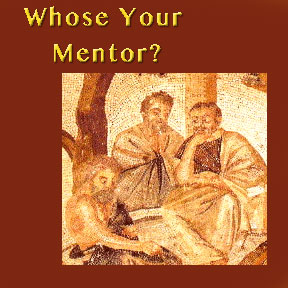
Who were their Experienced and Trusted Advisers? Did they have a Mentor?
Was there someone with more experience who helped them by sharing their knowledge and skills?
Was there someone who they copied their approach, their mannerisms?
Was there a person in their lives who helped them achieve their greatness?
Socrates said, “If a man is proud of his wealth, he should not be praised until it is known how he employs it.”
Socrates Mentor was Plato as noted in the similarity Plato’s quote,
“All things will be produced in superior quantity and quality, and with greater ease, when each man works at a single occupation, in accordance with his natural gifts, and at the right moment, without meddling with anything else.”
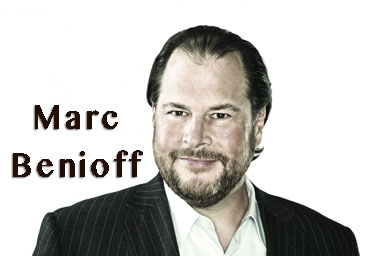
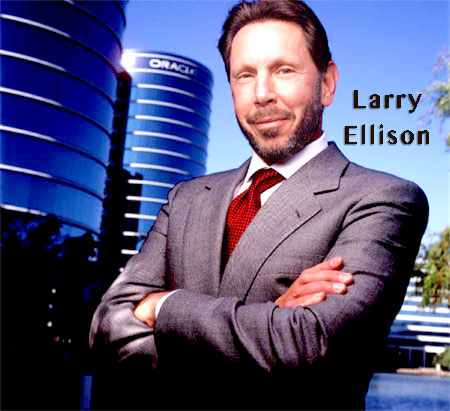
Marc Benioff’s, CEO who started the multi-Billion-dollar Salesforce.com, came from Oracle and his mentor. Although they had early disagreements, Marc Benioff admitted “He is my mentor,” “He was our first investor and first board member. There is no one I’ve learned more from than Larry Ellison.”
Bill Gates Microsoft – Philanthropist has donated more than $26 Billion dollars causes through the Bill and Melinda Gates Foundation.
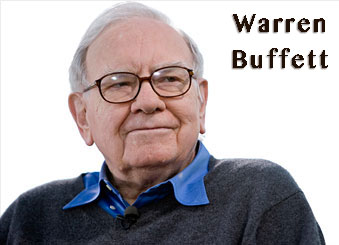
Bill Gates “…credits part of his success to his mentor, businessman and investor, Warren Buffet. During an interview with CNBC, Gates credited Buffet for teaching him how to deal with tough situations and how to think long-term.” The famous investor who states, “One word sums up our country’s achievements: miraculous.”
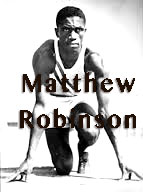
Jackie Robinson credits his older brother Matthew as his mentor and creating a love for athletics. Matthew Robinson won a silver medal in the 200-meter dash just behind Jesse Owens at the 1936 Olympic Games in Berlin. Jackie Robinson said, “Baseball is like a poker game. Nobody wants to quit when he’s losing; nobody wants you to quit when you’re ahead.”
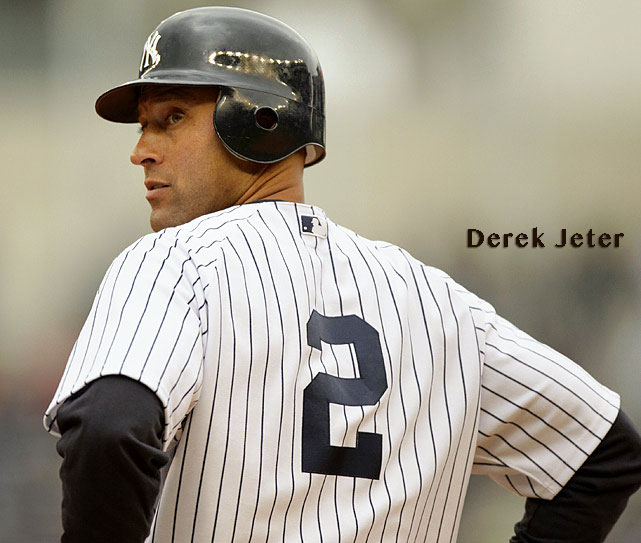
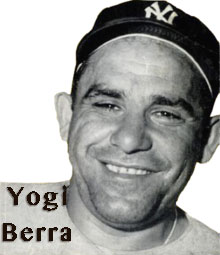
Derek Jeter said about his mentor, Yogi Berra, “[He] shook hands with Babe Ruth, helped bridge the gap between Joe DiMaggio and Mickey Mantle and won more World Series rings than all of them. That made him a treasured link to the Yankees’ past for Derek Jeter, who considered himself something of a student of franchise history.”
When his Mentor passed, Derek Jeter said, “To those who didn’t know Yogi personally, he was one of the greatest baseball players and Yankees of all time,” Jeter wrote on Wednesday in a post on his website, The Players’ Tribune.” To those lucky ones who did, he was an even better person. To me, he was a dear friend and mentor. MLB News
Some say Yogi’s greatest asset was his ability to deliver under pressure. This is the same they say about Derek Jeter.
Based upon the past, and based upon today, and until next Blog,
Preset Style = Travelogue
Format = Medium
Format Margin = Small
Format Border = Sm. Rounded
Drawing = #2 Pencil
Drawing Weight = Heavy
Drawing Detail = Medium
Paint = Natural
Paint Lightness = Normal
Paint Intensity = More
Water = Orange Juice
Water Edges = Medium
Water Bleed = Average
Brush = Fine Detail
Brush Focus = Everything
Brush Spacing = Medium
Paper = Buff
Paper Texture = Medium
Paper Shading = Medium
I agree saying ‘taking a short cut’ does sound as if…if somehow, we are cheating! Yet, think about the excessive amount of the time struggling to findwho andwhere we failed in the so-called Lesson’s Learned discussions we have after we’ve lost an opportunity.
Instead of Finding Blame after we have lost an opportunity, maybe the better question should be, “could we have done it differently; was there a better way?” After all, the blame game creates a keeping your head down contentment by doing the same thing repeatedly; especially if it keeps us from being blamed for the loss.
So instead of repeating Einstein’s definition of Insanity, let’s stop and truly work to understand what we are attempting to accomplish and determine if there is a better way! Take a page from top quality designers and truly identify the Customer’s Problem to ensure we propose the most effective implementation and resolution to their issue.
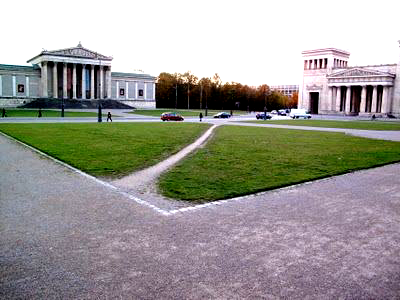
Top Quality Designers incorporate a “Desired Paths” approach early in their design process to help identify the Most Effective Use of their projects (e.g., short-cuts uncovering the most effective user experience into their over approach to their design). The UC Irvine architects took the desired paths approach literally when they allowed the users to identify the most effective use of their design by waiting until after the students identified the Short Cuts (worn paths in the grass) before they poured the sidewalks.
Tom Hulme, Designer, said, “The only time you know if there any good, if the designs are good, is to see how they are used in the real world…”
Maybe if we proactively established a What-if approach to our proposal approach, especially during the early stages, our Lessons Learn discussions may become more creative and valuable.
Who knows; they may even be more about understanding why we won this opportunity!
We can make an impact with our life or we can limit our ability to live well, limit our ability to live honorably, and limit our ability to be compassionate. The choice is ours; the real question has to be, “Why?”
Why would we ever accept doing nothing just because it’s easier? I still have memories of my grandparents, who were poor financially, but would insist they were rich from helping others. Perhaps the hardest question we need to ask ourselves; why does it matter?
We all recognize that every day we wake up is an opportunity to improve; an opportunity to make an impact. So I ask again, why should we ever accept doing nothing just because it is easier?
The answer is simple; we shouldn’t!
Ralph Waldo Emerson said, “The purpose of life is not to be happy. It is to be useful, to be honorable, to be compassionate, to have it make some difference that you have lived and lived well.”
I know Dr. Rick Rigsby did.
Until next blog,
“Being willing is not enough, we must do.” ~Leonardo da Vinci
“You may make mistakes, but you are not a failure until you start blaming someone else.” ~Anonymous
Instead of viewing our hiccup as a learning experience, an opportunity to get better, it’s easier to passively blame someone or something else. Approaching it from a, ‘defense in a offensive’ sort of way with two words;
My-Bad
I agree, it does sound like we are taking blame for our mistake, but what we really are saying (e.g., psychiatrist makes us feel better by calling it our inner-voice) is…
It happens to everyone, get over it!
Translation: If I hurry up and act like I am taking the blame, there’s a good chance others will join me in justifying why it was never really my fault in the first place.
Critical inner-voice or not, when we blurt My-Bad out and tap our chest, we are transferring blame. It is a flippant apology to others for making a mistake that results in a missed opportunity for everyone to get better.
So instead of My-Bad; take the first step towards reducing the mistake by acknowledging its existence. Then, and only then we can organize a plan to reduce it and work together to eliminate the hiccup altogether!
It is true, talent is never enough, but that does not give us an excuse to not work hard at what we do, even when it comes to finding talent! Yet it has been proven time and time again companies and sports select individuals based upon perceived versus documented talent.
How often have we missed the right person for the right opportunity because we waste an enormous amount of time identifying all the reasons why they are not a good fit for the position or our image of the person…is actually wrong.
The graduate from Harvard is better than the employee who graduated from a public school…let’s say, Nebraska?
Warren Buffett, the billionaire from Nebraska might argue differently. The Oracle from Omaha, as he is nicknamed, graduated from the University of Nebraska and has done quite well.
In sports, the Scouts take a simpler decision making approach. Their preconceived image states…size matters when selecting who to draft.
Certainly the 6’4″ athlete is better than the one who is 5’6″?
5’6″ Jose Altuve, the 2019 ALCS MVP from the Houston Astros’ was told he was too small.
As Hiring Managers, Recruiters, and/or MLB Scouts we need to change our thinking patterns.Rather than wasting time identifying why we should not hire or draft a player, let’s spend more time and effort into the evaluation process. Eliminating preconceived conclusions and seeking the right person with the right talent for the job!
Let’s form our conclusions based upon my paraphrasing of John C. Maxwell’s 13 Supportive Traits he identified in his book, “Talent is Never Enough.”
Belief lifts your talent – Do they believe?
Passion energizes your talent – Do they have Passion?
Initiative activates your talent – Do they have Initiative?
Focus directs your talent – Are they focused?
Preparation positions your talent – Are they prepared?
Practice sharpens your talent – Can they perform?
Perseverance sustains your talent – Do they have perseverance?
Courage tests your talent – Are they a self-starter?
Teach-ability expands your talent – Are they coach-able?
Character protects your talent – Are they ethical?
Relationships influence your talent – What do references say?
Responsibility strengthens your talent – Are they responsible?
Teamwork multiplies your talent – Do they collaborate?
As I started, talent is never enough, but as Benjamin Franklin said, “wise [people] profit by the mistakes of others, while fools will not learn even from their own blunders.”
Until Next Blog avoid preconceived conclusions and seek to find the best.
For whatever reason we believe success or failure is brought on by chance rather than through our own actions. We believe if we say certain words, we position our body a certain way, or at times seek divine intervention we can control the outcome.
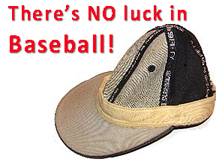
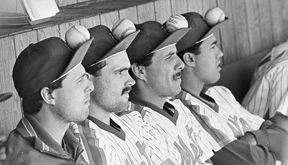
After all it is common knowledge the outcome of a game is controlled by external factors such as rally caps:
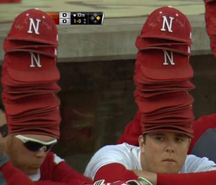
When one form of rally cap quits producing, it’s acceptable to slightly vary to what you have seen work elsewhere.
Depending upon the severity of the situation, Quantity over Quality may be the only alternative.
The discussion whether certain rituals creates luck has been around forever. In fact philosopher Seneca tried to quash the game of Luck around 4 BC. Even though Rally Olive Wreaths does not carry the same impact as rally cap, you can almost hear Seneca say, c’mon guys, “Luck is what happens when preparation meets opportunity.”
Guess no one was listening back then cause today we are still passionate about it. Everywhere you go we still believe Luck plays a critical role into our decision making and much like Seneca of 4 BC, Richard Wiseman, author of “The Luck Factor,” says, “NO!” He too states, “[Lucky people maximize] the probability of positive opportunities.” Instead of being lucky, he said lucky people are confident, engaged and detect opportunities to take advantage of versus becoming anxious due to fear of failure.
Yeah right, not once did he reference the rally cap in his book, nor did he witness the Nationals turnaround from a 18-32 season start to heading to the World Series. A success resulting tied to Gerarda Perra and his Baby Shark walk up song. Yeah, that’s the ticket!
So until next blog, let’s remember Clint Eastwood’s famous line in Dirty Harry, “You’ve got to ask yourself one question: ‘Do you feel lucky?’ Well, do ya…”
“The best preparation for tomorrow is doing your best today.”
~H. Jackson Brown, Jr.
A powerful quote, yet most of us missed out on the valuable lesson. A valuable lesson we missed because we prevent ourselves from taking the time to absorb the meaning of what is being said. A valuable lesson we missed because we jumped to a conclusion by inserting our own beliefs versus actually listening to what is being said. A mental process where we choose to insert or own beliefs because we find working to improve is hard. Too hard with an unfortunate result; we are losing out on a chance to improve.
Improving requires change and we tend to find it easier to justify why we are not improving. In sports we blame our coach for never teaching us anything, while in business we blame our boss for inhibiting our growth. In each case we are excusing our failure by transferring blame versus taking responsibility for controlling where we end up. In the end it is less difficult by blaming someone else versus truly admitting we are comfortable with failure. A comfort we use to reason away why we are truthfully failing.
We fail to change because we fail to change something. In many cases we are so comfortable failing we are note even aware of that ‘something‘ we need to change and whether changing it would make a difference or not. Why? Because we create an ill-conceived notion, a justification based upon our emotions, of where something is going to end up. A fictitious result we emotionally justify in our minds versus spending time researching what it actually takes to become successful. What it actually takes to improve.
Which is why I believe most of us are more comfortable with the passive ‘do our best,’ versus having to put the work in to answer the active question, ‘did you do your best today?’ Yet, if we did, I believe more of us would be prepared for tomorrow. So I would like to recommend every evening before you go to bed, challenge yourself with Marshall Goldsmith’s “6 Daily Questions” beginning with the phrase “Did I do my best to…” This forces US to take responsibility for OURSELVES versus looking for a coach, looking for a boss, or looking for a company to help us improve.
Did I do my best to Set clear goals?
Did I do my best to Make progress toward achieving my goals?
Did I do my best to Find meaning?
Did I do my best to Be happy?
Did I do my best to Build positive relationships?
Did I do my best to Be fully engaged?
Until next blog be proactive and make a change, versus reacting to whatever happens tomorrow.
Our internal tug-of-war battle with success really doesn’t exist, regardless if we are an athlete or a business person. In fact it is not even a battle. We just make it one and spend way too much mental time worrying rather than doing something about it.
Here’s an example; I know it, I just procrastinate on anything associated with improving. In fact, this bad habit is keeping me from ever solving everything. It certainly prevents me from ever being creative! Heck, why waste energy, if I procrastinate long enough someone else will help me solve my problem.
That was even tough to write, but with each keystroke I can see why we have the tendency to want to quit while we are behind. So instead of ‘wallowing in pity’ as my mother would tell me, let’s apply a little computer science ‘divide and conquer algorithm’ by recursively breaking a problem into two or more sub problems; Basically helping Creativity survive its own success. Let’s talk about Creativity and a Bad Habit.
First, we must realize creativity is not an innate talent.
Art Markman, PhD Psychology and Marketing stated “[we] need to believe …an activity really is a skill [we] can learn.” To prove it, he provided these 3 Ways to Train Yourself to Be More Creative.
Become an ‘Explainer’ – When we learn something, explain it back to our self
Practice Openness – Become motivated to consider new ideas, concepts and experiences
Keep Asking New Questions – When we have a problem, think of multiple questions viewing the problem from a different light. This allows our memory to seek more information to help resolve it
You see there are no bad or good habits, just habits. So to change, researchers from University College London examined the new habits of 96 people over the space of 12 weeks and found that the average time it takes for a new habit to stick is actually 66 days; furthermore, individual times varied from 18 to a whopping 254 days. Elizabeth Gilbert, author of ‘Eat. Pray, Love’ defines her simple recipe to defeat those fictitious tug-of-war battles and gain the creativity we are seeking is,
“[Put] your head down and perform with diligence, and devotion, and respect, and reverence to whatever the task is love is calling forth from you next.”
Now about that procrastination bad habit, keep it simple. Quit procrastinating and make ourselves do it until it becomes a new habit.
Until next blog,
“…never give in, never give in, never, never, never, never-in nothing, great or small, large or petty—never give in except to convictions of honor and good sense.” ~ Winston Churchill
Merriam-Webster defines an expert as someone having, involving, or displaying special skill or knowledge derived from training or experience. We got to like the sound of that!
Are you the first to say, “I don’t know?”
Do you have a sense of wonder and delight at everyday details?
For most, the answer is ‘no’, which is why we have so much trouble identifying where we are today. Where we are in the business world or where we stand competitively as an athlete. We refuse to look dumb and admit we don’t know. Instead, we feel more comfortable providing an answer we believe others want to hear; “I make good money,” or “I can always improve.” Imagine trying to answer which job to take, which college to play ball at, or even determining how to pick fiends.
Unfortunately, we are not open-minded enough to let anyone know we really don’t have a clue. It’s as if we are afraid of the work curiosity creates. By not knowing something will require us to ask questions, to investigate, and even though the research may lead us to knowledge, we are more afraid SOMEONE will realize we don’t know something. Unfortunately, that SOMEONE is US!
Dean Graziosi in his book, “Millionaire Success Habits” describes our inability to truly answer questions is one of the biggest challenges facing each one of us today. It begins with “there are so many things…vying for our attention…that if we don’t manage modern life, it will manage us.
So going forward let’s establish a “friendly relationship with a question mark,” and listen to Laura Fox describe how her 96-year-old grandmother helped her twin brother and she became comfortable with the words, “I don’t know and help them start on an adventure.” If we don’t, we are going to become Experts in our Own Minds and our self-perceptions of expertise, our closed-minded thought will only produce the title, Earned Dogmatism.