Categories
Blog

#MVP | A Ball In The Dirt, STEAL!

When you get on base your goal, in fact the team’s goal, is to score your run. Whether you can run a little bit or not, awareness is the key! So, let’s agree on some obvious ground rules. The ball will be in the hands of either the Pitcher or the Catcher the majority of the time and you should think two bases every time the ball is hit, including out of the batter’s box.

Yet it is realistic to believe not everyone will hit a double every time they’re up. So whether you draw a walk or single, getting to second has to be your number one priority even when most of us don’t have the green light. Fast or slow (let’s say less fast) by anticipating a ball in the dirt will help even the slowest runner get into scoring position.

With every pitch thrown observe the angle and direction with one goal in mind, getting to second. If the ball is heading in the dirt, take off! The Law of Averages is in your favor so, RUN FOREST RUN!

Once you take off, there are so options and the possibilities you create!

If he catches the ball below his knees or on a hop

  • Possibly causing a catcher to rush, missing or bobbling the ball as he attempts a backhand with a glove not designed to catch a ball like that
  • Possibly causing the catcher to rush, standing straight up versus staying low and gaining ground, changing his release point and have his throw end up in right center
  • Possibly causing the catcher to rush, dropping the ball as he transfers it from the glove to his throwing hand
  • Possibly causing the catcher to rush, making a less than accurate throw

In addition to all the possibilities that can affect a catcher catching and throwing the baseball, the other half of the play is still 50-50 at best:

  • The player covering the base has to catch the ball
  • The player covering the base has to make the tag
  • The umpire has to call you out

Nice odds just by paying attention! Those odds increase dramatically if the catcher has to block the ball.

  • He has to to pop-up (hopefully the ball is right in front of him), bare hand the ball cleanly and make an accurate throw.
  • Now if the ball caroms to his left or right increases your odds further [e.g., adding time or creating a bad-throwing angle].
  • If he misses the ball completely play heads up and consider two bases!

Anticipate it! Maybe it’s the count [potential to break something off into the dirt], maybe it’s where the catcher sets-up or maybe it’s the pitcher thinking way too much about the hitter at the plate or whose on-deck. Expect a ball in the dirt, recognize the angle of the pitch, and take off.

Think about it, when you pay attention and take advantage of what is given too you baseball is simple. Be aware and cash in on these opportunities because it is easier to score from second, only to increase your odds when you are on third.

Until next Blog,

Head-Shot-for-Newsletter-Smaller

Al McCormick

Categories
Blog

#MVP | A Quality Team Is Based Upon Individual Play

When organizing a team to participate in the USA Baseball National Tournament [formerly Junior Olympics], the main purpose, my goal, is that each player, as well the team, leave the tournament realizing the game of baseball is, “An Individual Sport in a Team Concept!

In the later years I started organizing the team made up of players from all over the country. Most Valuable Player’s team success rate faltered somewhat, but USA Baseball’s interest in my players’ grew. In fact, USA Baseball seem to select one or two players [a limited number of players selected from the field of 144 teams] from my team every year to participate in the final round of National Team try-outs held months later; Each with the hope of making the USA National Team.

Every year I remember coaches and parents asking, “How and the heck did your team with a record 2 and 5 get anybody selected?” I answered, “Being Good!”

Sadly, most just didn’t get it! The talent level of a player has nothing to do with the performance of a team. It has nothing to do with a particular game or even the teams record. In fact I can honestly say, I have never had a college recruiter or Pro Scout tell me they were interested in everyone on my team. Their decisions are based upon their needs and whether a particular player is good enough! My job was simple; help each player show well individually.

The hard part was helping players understand how important their individual play was versus focusing or worrying how well their team does. Conceptually from a Team perspective, if the majority of your teammates play well individually, you have a chance and are likely to win. However I believe the corollary is also true; If only a couple players play well, the odds of winning are against you. So play well individually and it won’t be long before the other players will attempt to do the same. How long it takes a team to recognize success is based upon individual play usually identifies how long before a particular team starts winning.

True, talent can determine just how good your team could be, but the talent needs to do their job before you can ever find out just how good they are.

Until next Blog,

Head-Shot-for-Newsletter-Smaller

Al McCormick

Categories
Blog

#MVP | Get Evaluated Versus Making Comparisons

I just wanted to see how I stacked up,” are the words most families use to justify why they wasted the money they did for a showcase. Whatever makes you happy, but it is still a waste of money.

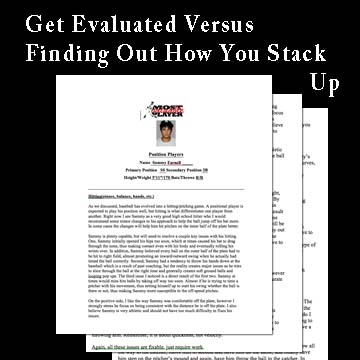
Doesn’t it make more sense to find out “what YOU are good at, what YOU need work on,” and more importantly, “find out what YOU can do to reduce your weaknesses, versus comparing your talents with other players. As with everything in baseball, it’s simple, Get evaluated by someone who truly understands your position or positions you would like to play in college.

The evaluation should be one-on-one and presented in a lesson format to ensure you UNDERSTAND what drills they are putting you through and why! Helping you understand what it takes to be good and help you understand what steps you should be taking to get there.

A quality evaluator should provide you with a detailed written document explaining [not a rating based upon useless numbers] what you are good at, identifying what and why you are weak on certain aspects of your game, and provide you with drills you can use to reduce your weaknesses and improve as a player. Start at age 12 continuing throughout high school, and I even recommend while you are playing college baseball . Get evaluated and get better!

If you are having trouble finding a quality evaluator locally, Most Valuable Player is ready to help you where you are, and will do it today. Sign up here and let’s get started.  

Get it done, after all, time is the only thing not standing still.

Until next blog,

Head-Shot-for-Newsletter-Smaller

Al McCormick

Categories
Blog

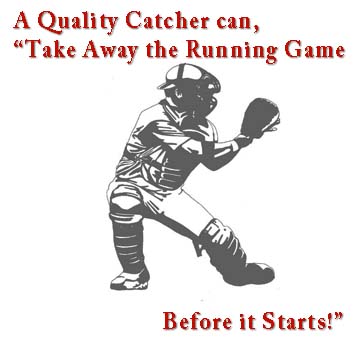
#MVP | Take Away The Running Game Before It Starts!

Stealing is a very useful tool in a coach’s arsenal. Done correctly, it can be used to change the momentum of any game. In fact even the slowest runner can steal a base when done at the right time [e.g., big jump, delayed, or on a lazy catcher]. Moving the runner into scoring position or getting them to third is a good thing for the opposing coach.

True, it is the pitcher and the catcher’s responsibility once a runner is on base, but what if you were able to limit the number of times the other team attempts to steal. What if you were able to create a bit of doubt in the opposing coach’s head, limiting the number of times he gave the steal signal.

Well, it’s simpler than you think!

I agree most runners steal off the pitcher, but when a team has a weak or lazy catcher, stealing is almost a forgone conclusion. The corollary is also true. A team with a quality catcher creates doubt in the opposing coach’s mind and in some cases he is able to hide the pitcher’s inability to hold a runner on.

Kevin Schnall, one of premier catching instructors in the country [presently head recruiter at UCF], believes catchers should have one stance, and one stance only. Pure and simple, receive the ball as if a runner is on base at all times.

Too many catchers have one stance for when a runner is on, and another when the bases are empty. This form of laziness seems to carry over when it comes to blocking and pass balls; “no one on, let it go.” Its as if they truly believe they can turn their reaction level on and off like a light switch. Now, I would never say a player could never do that, but that type of catcher usually has a short baseball career.

Catchers are the coach on the field, which is a bit of an oxymoron if the way they play helps an opposing coach or the opposing team. An umpire hit by a pitch or a catcher taking forever to get a pass ball usually translates; hold on…let’s not drag the umpire into this. Pure and simple a catcher who hustles can make a mediocre team better, while it is also true the lazy catcher can make a Great Team Mediocre.

So, set up as if a runner is on base, block everything, pop-up as if someone is stealing, and make every throw firm, quick, and accurate. Not only will you make the opposing coach question whether or not to run, umpires love catchers who hustle, which just may help your team, especially on a close call!

Until next blog,

Head-Shot-for-Newsletter-Smaller

Al McCormick

Categories
Blog

#MVP | A Summer and a Wake-Up!

In the military we would count the days until we would return home [e.g., 365 and a wake-up]. A countdown to something we looked forward too, and as you prepare for your first year I believe you should have the same excitement. Prepared and ready to go!

Yet too many incoming freshmen start their first year of college baseball physically beat. Some come in as damaged goods. Adrenalin carries them for a day or two, but it won’t be long the pressure of being away from home, combined with a rigorous academic/athletic schedule, wears you down. Worse, what is a coach suppose to think?

  • Velocity is down. How does a coach judge a tired arm?
  • Sore Arm. What can a coach expect in the spring?
  • Bat speed down. Power not there and you begin to press.
  • Legs are tired. No longer one of the quick ones.

Too many athletes fail to realize they are a freshman academically, but athletically they are a baseball player! So be prepared to play versus preparing to red shirt or be a back-up player.

It is important to recognize how significant it is for an incoming freshman to make an impression. An impression that makes a coach glad he offered you a scholarship and places you in the mix. So go into the fall expecting to be a starter, do your job, and keep getting better.

The summer is the first step to establishing what it takes to make the impression for a new coach, new team, and new school. So focus more on getting better, being well rested, and ready to play.

This begins with playing fewer games and spending more time establishing a great workout ethic focused on getting better.

  • Rise Early. [e.g., No school does not mean sleep till noon]
  • Eat well means eat right. [Try and establish 6 meals a day. Healthy food, not fast foods]
  • Morning Physical Workout – Combination of lifting, Aerobics, Plyometrics]
  • Technical Workout – Fine-tune your position working on technique
  • Mental Exercise – Relax, but do so studying every aspect of your position.
  • Play or Simulate a Game – Work on implementing techniques.
  • Relax with Yoga or Tai-Chi
  • Get a good night sleep.

Remember baseball is an Individual Game in a Team Concept. No excuses. You want to be the individual the coach puts on the lineup card.

Start today and make tomorrow-another opportunity to get better.

Until next Blog,

Head-Shot-for-Newsletter-Smaller

Al McCormick

Categories
Blog

#MVP | Your Son a Rising Senior? The Baseball Clock is Ticking!

For most, playing their last high school game is the first time they realize the baseball clock is ticking. Not just the players, parents go through the same awakening. Reminding their son, sometimes daily, “work hard if you want to play professional baseball!” Every day of the year is an opportunity to get better, that is, UNTIL their senior year.

Tick, tick, the player’s dream is getting closer. From T-Ball to travel/select baseball, to the summer before his Senior year. His heart bursting out his chest as he rips open the envelope from a college hoping it is more than a shake-and-howdy-come-to-our-camp letter, to anxiously awaiting calls from college coaches that seem to never come. This is not the time to send mix messages or to start back peddling a bit ,“Son, playing college baseball is nice, but you need to select a school based upon academics, even if you don’t get the opportunity to play baseball.” WHAT, Huh, WHAT?

What made you change your mind after twelve to thirteen years? Is the Lawn Chair Convention leading you a stray [Showcases are Not the Way], or rather than admit you wasted time and money it is easier to divide and conquer by convincing yourself a Business Degree from one school is better than a Business Degree from another. Maybe it’s Empty Nest Syndrome selfishly clouding your honesty, but whatever the reason now is the time your son needs you the most. This is the time to help your son do the right thing! Making the right decision when it comes to helping him find a good baseball fit for him.

Whether he admits it or not, he is looking for you to guide him, so help him out. Once he decides on a college, it is his responsibility to make it work both academically and athletically. So help you son find the right baseball opportunity according to these three key points:

  1. Does your son like the coach?
  2. Does the coach like your son?
  3. Are you going to get a chance to place baseball there?

Remember, the degree is Plan B, not dictating where he gets it!

Now I recognize there is a ton of confusion/propaganda surrounding the college recruitment process, but I truly believe you know your son better than any one. So let me recommend Most Valuable Player’s College Recruitment in a Box [multiple short how to videos guiding you to help guide him every step of the way] which is designed to help you and your son to find the right school academically, athletically, socially, and financially.

No need to panic, but you do need to start doing the right things today and with the understanding, the clock is ticking.

Until next Blog,

Head-Shot-for-Newsletter-Smaller

Al McCormick

Categories
Blog

#MVP | Missing a Foul Ball = Increased Pitch Count

Positional players must recognize, defensively, it is their job to help the pitcher reduce their pitch count.

We have all witnessed, or worse, maybe participated in a game where an error on the routine play results in a rally for the other team. I must admit I hate the one where you mentally hear “circus music” versus a feeling of confidence going after a foul ball and a chance to get their best hitter out. Nope! Too many times our “inner self” is saying, “I hope the other player calls it!” We end up running in circles. Yep, send in the clowns.

Don’t you hate the simple foul pop-up near the fence where the player seems to drift over, as if they are lining themselves up in S-L-O-W motion? First they go left, then they drift right, then in anticipation of running into the fence, they pull back; only to have the ball drop between them and the fence. It never fails, the next pitch he hits a bomb. “Don’t you hate the circus?

So next time the ball is popped up, sprint to the fence, grab it with your throwing hand, turn and find the ball. Remember this is a pop up, which means, once you eliminate the fear of running into the fence, ah, that Zen feeling. With the panic feeling gone catch the ball like you have done a million times before. Look up, find the ball and react. No need for clowns here! You have three simple choices:

1.    Stays put and catch the ball at the fence.
2.    Under control, slowly drift away from the fence towards the ball and make the catch
3.    Climb or reach over the fence and make a spectacular catch – now we’re talking ESPN music!

Catching “pop-ups” has as much to do with “success” as it does with “failure.” The more success some athletes have the more they are afraid to fail. Think about, as coaches, parents, and players we spend the majority of our time discussing (sometimes yelling) failure and other than kudos, we spending zero time explaining to athletes how to deal with success.  It is scary when you start to question, “Am I good, or just lucky?”

So before you send in the clowns check out Glenn Moores’ “Handbook for Success.” It will help you deal with Success and Failure.

HandbookForSuccess-Small

Until next Blog,

Head-Shot-for-Newsletter-Smaller

Al McCormick

Categories
Blog

#MVP | Playing the Hot Corner in Baseball as well as, “I Don’t Know”

Playing third is about trust, reactions, and lack of emotions covering the routine grounder, backhand, and the bunt.

Routine Grounder

Trust is the operative word when playing third. Instead of surrounding the baseball your job is to attack it at an angle towards first. Trust, if you are unable to get to it, or it gets by you, the shortstop will make the play.

As the pitcher prepares to pitch, take a step to step and a half towards the batter, presenting your glove out and away from your body. This allows maximum arm freedom to react and field hard hit balls.

  • Keeping you glove out and away from your body, attack the ball at an angle towards first.
  • Come through the ball as you field [keep going towards first even after you fielded the ball].
  • Staying low, look to first then throw the ball [this keeps a consistent release point and prevents you from being a “haffa-playa,” a rocket to the stands after a nice fielding play]

Follow your throw for at least a step to a step and a half.

Turning the Double Play

How many times has this happened to you? A runner at first, a grounder to you at third; sure double play with one exception, the ball ends up in right center. If your lucky the ball doesn’t end up in the outfield, but the throw is off turning the sure double play into, “at least you got the lead runner.” Not good enough!

The simplest “5-4-3” double play occurs when the ball is hit to your glove side. Catch the ball out and away from you, STAY LOW!

  • Snap your head/neck [preventing the rotating your head as you throw syndrome] to your target at the same time you pivot the right leg [similar to “squishing the bug” when you are hitting].
  • Focus on and throw to the base, not the player. [It is the job of the 2B to be there waiting or getting there to turn the double play. Attempting to lead him like a quarterback usually ends up with a throw behind him] Do your job!
  • Use a quick wrist snap-type throw from a 2 o’clock arm slot or in some cases lower. The key is quickness to second versus velocity, which provides time, to make the pivot and throw to first.

Staying low throughout the throw promotes a consistent release point and the wrist-snap type throw allows a quick and accurate release point.

So, take advantage of all double plays and make them! Not only does it reduce pitch count, there is a finite number of outs in a game so take both outs when they’re giving them to you!

Backhand

A Backhand is Simple as Turning Your Head. I witness a lot of quality attempts at balls requiring the backhand. Notice I did say attempt. As with all things in baseball, a backhand is simple when done correctly. Hiccups, or bobbling the ball, are the result of doing something incorrectly.

Most players have the habit of looking where we believe we are going to catch the ball, basically using peripheral vision to line up their glove with a bouncing ball, that can hop either left or right. versus where the ball is coming from.  The simple fix is to turn your head, eyes front, and face the ball. Now you are now looking directly at the path of the ball.

As with every grounder, extend your glove arm out and away from your body promoting true soft hands and ability to react to a short hop to the left of right. Make the catch; throw them out!

Bunt or Slow Roller

Even when you know it is coming prepare the same as if it is a routine grounder. Take a step to step and a half towards the batter, presenting your glove out and away from your body. View the bunt as a reaction play, versus an emotional one. When he squares, start walking towards the batter glove presented and ready to react. Once the ball is down, attack it using your glove to field the ball in a controlled chaos manner.

Keeping your eye on the ball to allow your brain and footwork to automatically place you in position to catch the ball on your right leg and throw off your left leg. Similar to turning the double play, stay low, snap your head to find the target, make the throw, and continue for a step to step and a half after the throw.

Practice and Pre-game Drills

If you want to become a player who knows how to play 3B versus being a player is plays 3B, then I recommend you have someone stand in front of you and roll grounders until, as the professionals do, practice until it doesn’t go wrong.

Diving after the baseball can be a difference maker for someone playing third. Know how to do it correctly [check out an earlier blog, “Diving the Baseball; Spectacular Catch or Injury”] and practice it.

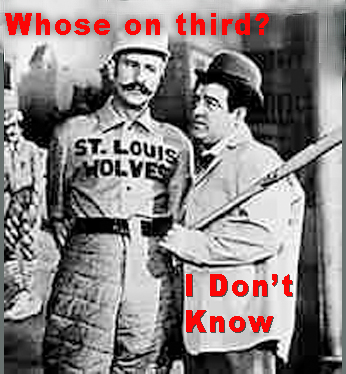
So when they ask, “Whose on third,” they will say your name versus “I Don’t Know…”

Hope you enjoy this Abbott and Costello bit as much as I do!

https://www.youtube.com/watch?v=WQXwt83hYkE

Until Next Blog

Head-Shot-for-Newsletter-Smaller

Al McCormick

Categories
Blog

#MVP | Instead of “K,” How About an OUT!

In the last week I witnessed a pitcher in college, a pitcher in high school, and then, a pitcher in the majors lose focus, and sadly, lose the game. As the Daily Intelligencer said in 1985, “[Baseball] is not rocket science and it’s not brain surgery…”

The game of baseball is about outs [e.g. 21 for a 7 inning game and 27 for a 9 inning game] and if you score one more run than the other team, “YOU WIN!” Nothing more nothing less, UNLESS, you add in emotion! There I said it.

All three games were in the last inning and all teams in the field were ahead. Two of the three teams lead the whole way, while the one team took the lead the previous inning. In theory, all three teams should have won [operative words – should have] yet all three teams lost because of the same reason. The pitcher emotionally decided to do more; he decided it is his job to win the game all by himself. Unfortunately thinking this way causes pitchers to over pitch, to over think, and in most cases, lose.

Take a deep breath, and realize the last inning is no different than the first inning; translation, pitch the same way. ” Recognize their objective, pitch to each respective hitter’s weakness, hit your spots, and pitch to a situation [e.g. throw inside if the other team has runners on second and third]. It’s either convenient or inconvenient amnesia, but because the game was on the line each pitcher seemed to view their job as striking everyone out versus realizing his job was much simpler than that; Help “his team” get three outs. It’s not about fooling the hitter, throwing off-speed versus fastballs, or getting into the, “since this is his 3rd time seeing me he probably is thinking I am going to throw a fastball, so I am going to…,”STOP! Throw the grounder, throw the fly ball, and if it happens, accept the strikeout.

It really is this simple, yet in all three games they were over thinking versus “thinking without thinking. Do your job; Pitch!

Until next Blog,

Head-Shot-for-Newsletter-Smaller

Al McCormick


Categories
Blog

#MVP | Fielding The Baseball

The objective of baseball is to score one more run than the other team, which translates into how each player must play their position – making every routine play!

The emphasis is the same whether you are playing 7 innings or 9 innings, focusing on the outs [e.g. 21 or 27 per game]. Misplaying a grounder, is giving the other team an extra out and an extra chance to score a run.

So, when the pitcher does his job, you have to do yours. A routine grounder has to be a routine OUT every single time.

The key is quality footwork.

Footwork

Show me an infielder with quality footwork and I will show you an infielder whose fielding percentage is likely to be 100% every year!

Your footwork makes fielding easier and promotes an accurate throw just by correctly positioning your body. Let your feet position your body to:

  • Catch the ball out in front and away from your body
  • Automatically align your front shoulder in the direction you want to throw

Again, we are talking routine grounders here, not break dancing!

http://vimeo.com/91228065

Until next Blog,

Head Shot for Newsletter Smaller

Al McCormick