Categories
Blog

#MVP | Baseball; Continue to Dream Versus Becoming Realistic

Contentment is defined as the state of being contented. Yet Leo Babauta [ZEN blogger/journalist from Guam] described contentment as,

…contentment isn’t a matter with being content with your situation in life and never trying to improve it. It’s a matter of being content with what you have — but realizing that as humans, we will always try to improve, no matter how happy we are. If we don’t, we have given up on life.

Yet, too often we become satisfied with where we are. My son is playing varsity, has a high batting average or is a very good pitcher. That’s not a dream! That’s not a goal! Instead we suppress our dreams for fear of what others think,  embarrassed, we do the reverse. We change our goals to fit what others think and become what others believe is more realistic . End result, we set our goals too low.

What is wrong with setting a goal of playing Major League baseball?

After all we help them establish their MLB goal as early as T-Ball. Work hard and you have a chance to play Major League Baseball. Little league onto select ball, then travel ball. Running them all over God’s green earth, always seeking the best and yes, always demanding they improve as a player. Reach for the stars, but ensuring they realize, if you want to play at the highest level you have to give a little more!

Then, as if we get scared, afraid they are going to fail, we soften. Instead of pushing them to continue their dream to be a Major League Baseball Player, we start to channel their enthusiasm into becoming happy they made the high school baseball team. We change the focus. It’s as if we are justifying all this hard work was worth making “All County” or “All State.” After all, we need to be Realistic.

I agree with Will Smith, the famous actor, who said, “Being realistic is the most common path to mediocrity.”

So, when it comes to baseball, how do YOU answer the question, “What is the secret to your contentment?”

Until next blog, don’t be mediocre.

Head-Shot-for-Newsletter-Smaller

Al McCormick

Categories
Blog

#MVP | Ignore The Lawn Chair Convention, Help Your Son Improve

Walter Hagen [famous golfer] said,

“…stop and smell the flowers along the way.”

Imagine taking 10 to 15 minutes each day and let your five senses take over. Observe and absorb versus using our busy lives as excuses to miss the little things.

Unfortunately worrying about what everyone in the Lawn-Chair Convention thinks consumes so much of our time we miss the opportunity to help our sons understand this simple game, much less enjoy our son’s improvement. Nope! Too often our thoughts are directed to what Gus, Mary, or Bill think, versus experiencing the development our own son.

I argue it skews a player’s approach to hiccups [e.g., bad outing]. Instead of taking the time to understand the issue and why he failed, he quickly repeats what he believes his parents want to hear, “I went 0-3, guess I need another hitting lesson?

I am sure it is no surprise to you, your sons want to make you proud. So, by coming right out and admitting defeat, it just might make his ride home a little bit more enjoyable. If nothing else, they attempted to say what they believed you were going to say.

If you don’t already, may I recommend you help him understand Failure is an Opportunity to Improve. Approaching Baseball and Life this way will help him tackle problems through the development and improving his decision making skills.

I am not advocating you patronize him, but take time to, “Thank him for his effort and the opportunity to see him play” As your conversation about the game progresses, calmly ask him, “what does he thinks he needs to improve on?” As with most of us, your son will appreciate the fact you actually care what he thinks.

A relationship we all want to have with our son before he leaves the nest and heads to college. As the Trace Adkins song suggests, one thing is certain,

“You’re gonna miss this
You’re gonna want this back
You’re gonna wish these days hadn’t gone by so fast”

Until next blog,

Be Thankful, Thankful Every Day!

Head-Shot-for-Newsletter-Smaller

Al McCormick

Categories
Blog

#MVP | Baseball, It’s More Than A Slogan…Or Is It?


Slogans are those creative sayings, tag lines to help you understand the importance and/or benefits of their product. Not sure this was the case when Chicago White Sox Coach Paul Richards described the play of his second baseman as, “I’ve seen better hands on a clock.”

Yet, however funny the sarcastic insults might be, I do believe there are baseball Slogans that truly defines what it is like to play this game.

Describing the Game:

Warren Spahn [HOF 1973] probably describe baseball best when he said,

What is life, after all, but a challenge? And what better challenge can there be than the one between the pitcher and the hitter.” The fans and the players [in the field, up at-bat] are waiting to react.

Joe Garagiola, former MLB Player and baseball announcer [who defined himself as “Player to Be Named Later.”] explained,

Baseball gives you every chance to be great. Then it puts every pressure on you to prove that you haven’t got what it takes. [Yet] It never takes away that chance and it never eases up on the pressure.”

It’s “up to you” is the defining factor making baseball such a great game and why I believe the ones that figure it out have the potential to be successful. Even after baseball.

The Game within the Game:

Rocky Bridges [about himself, “I never got in the game, but I sat on the bench with Mickey Mantle, Ted Williams, and Yogi Berra. I gave’em instruction in how to sit”] stated,

There are three things the average man thinks he can do better than anyone else: build a fire, run a hotel, and manage a baseball team.”

Yet, to be successful, to be a winner, there is always a game within the game even amongst your own team. Again, those who figure it out are usually successful. Earl Weaver [HOF Manager 1996], when talking about his Hall of Fame Pitcher, probably portrayed this better than anyone.

I have to move my outfielders ten steps to the right, so that after [Jim] Palmer moves them back five steps to the left, they’ll end up in the right place.”

The Defense:

We’ve all heard Paul “Bear” Bryant’s slogan, “Offense wins games, defense wins championships.” One thing is for certain; defense can take the wind out of your sails with one pitch. Robert W. Creamer said, “[Casey Stengel HOF 1966] called the double play the most important play in baseball. It’s two-thirds of an inning… One ground ball and [slap of the hands] two! You’re out of the inning.”

It can be depressing, especially when it happens in the late innings. Just typing it, I want to drop my head.

The Offense:

Mickey Cochrane [HOF 1947] said, “It only takes one to hit it…” With three pitches it is your job to know which pitch you can hit for a double or more, then it is your job to swing.

Which was not the case for Duane Kuiper who didn’t swing once and was called out on three pitches by MLB Umpire Ron Luciano. He simply responded, “That’s the problem with these bats today. They’re just not making wood the way they used to.” 

My Assessment:

Baseball is more than a Slogan, “Baseball is an individual sport in a Team Concept.”

Until next blog,

Head-Shot-for-Newsletter-Smaller

Al McCormick

Categories
Blog

#MVP | A Pitcher’s Secret Sauce – Knowledge of Attentional Blinking

What is “Attentional Blinking?

  • “Attentional blinking,” is a phenomenon that the second of two targets cannot be detected or identified when it appears close in time to the first
    • What happens – Our eyes focus on and deal with the lines of motion our brain interprets.
    • Our brain interprets and reacts to the second pitch based upon the information it retained from the first pitch
  • Reality – when an attentional blink occurs, the hitter GUESSES on the second pitch based upon the visual input of the first.

When done correctly it only takes TWO Pitches to get a batter out. The first pitch sets them up, and the second usually results in a miss-hit baseball where they get themselves out.

So how do you take advantage of “attentional blinking” and “Who will it work on?”

  • The anxious hitter who jumps in the batter’s box after just crushing a ball foul or feels he is right on you after fouling a ball straight back
  • Time Frame:  Throw the opposite pitch within 10-12 seconds [e.g., Fastball after a Changeup, or Changeup after a Fastball]

Now I never placed a stopwatch on it, but I can honestly say it worked every time regardless of the hitter’s talent level!

The more you and your catcher observe each hitter on the opposing team, the more success you will have.

More importantly you will reduce your pitch count and soon knowledge of Attentional Blinking will become your Secret Sauce!

Try it!

Until next Blog,

Head-Shot-for-Newsletter-Smaller

Categories
Blog

#MVP | Cubs and Their Fans FINALLY Embraced the Near Win

The curse began during Game 4 of the 1945 World Series, when Billy Sianis and his pet goat, named Murphy, were ejected from Wrigley Field. Irate of how he and his pet were being treated he proclaimed,

The Cubs ain’t going to win no more. The Cubs will never win a World Series so long as a goat is not allowed in Wrigley field.

A die-hard Cubs Fan must view the curse as the commencement of a battle. A curse you cannot simply patronize, as the new owners tried to do by allowing Billy and his pet goat walk Wrigley Field in 1984. Nope, the Padres swept them. It was going to take more than the Goat walking on the field.

The Cubs needed to quit worrying about the goat and recognize the Archer’s Paradox; then and only then would they find out what it takes to hit what they were aiming for.

The World Series!

What the Cubs needed is a Near-WIN!

I tend to believe it was Steve Bartman incident, who, in 2003, created the necessary Near-Win for the Cubs and their loyal fans to overcome the Curse of the Goat.  It was almost a forgone conclusion the Cubs were heading to the World Series. They had a 3-2 game lead in the NLCS, and were ahead 3-0 with only 5 outs away in the 4th and deciding game when… You guessed it; the Curse of the Goat reared its ugly head. Steve Bartman, the lifelong Cubs fan, excitedly reached over the fence and took what would have been the second out from the glove of Cub Moises Alou.

As they say, it was all downhill from there. The Marlins put up 8 runs, and what many believe, stole game six, resurrected the Curse of the Goat, going on to win the seventh game thereby eliminating the Cubs from where everyone thought they would be; playing in the World Series!

So close! Just 5 outs away and yet they lose. Perhaps this NLCS loss was the shock they needed to understand just how close they came and provide them the knowledge of what it takes to get there.

The “What” Sarah Lewis describes as “Embracing A Near Win,” to finally end the curse?


So why did it take 13 years [2003 to 2016] to figure it out? Maybe “Embracing a Near Win” hurts so much, we tend to lose sight of the fact that baseball is a mental game and allow emotion to interfere with our decision-making. So much so, a fan paid $113,824.16 for the Steve Bartman ball only to destroy it on 06 February 2004.

Let’s be honest, the Cub’s 25 Man Roster is “The What” that finally ended the Curse of the Goat!

Pitchers:

Carl Edwards Jr. Kyle Hendricks Jon Lester Travis Wood Mike Montgomery
John Lackey Pedro Strop Jake Arrieta Justin Grimm Aroldis Chapman
Hector Rondon

Positional Players:

Tommy La Stella David Ross Albert Almora Jr. Chris Coghlan Javier Baez
Kris Bryant Ben Zobrist Jason Heyward Dexter Fowler Addison Russell
Wilson Contreras Anthony Rizzo Miguel Montero Jorge Soler


Now I must admit I did find it interesting, or is it a coincidence, the Cubs clinched the National League Pennant [22 Oct 2016] on the same day Billy Sianis passed away [22 Oct 1970]?

Ah who cares, after waiting 71 years to get to the World Series, I am guessing all these loyal Cub Fans agree with Sarah Lewis in saying, “Completion is the goal, but we hope it isn’t the end.”

Until next blog, remember they did let a goat back on Wrigley Field,

Head-Shot-for-Newsletter-Smaller

Al McCormick

Categories
Blog

#MVP |Three Words You Don’t Want To Hear – Ulnar Collateral Ligament!

There are approximately 900 ligaments in the human body, but when it comes to baseball the Ulnar Collateral Ligament is probably the most famous. Although most would be hard pressed to define what a ligament actually does, the perceptive success of repairing ligament damage has created such a positive aura, I sadly have heard players and their parents contemplate Tommy John surgery with hopes it will increase their velocity?

What?

Are you crazy?

Why?

I am not here to judge anyone who had or needs to have TJ elbow surgery, but I am very disappointed in those looking for the easy-way [a simple fix] versus finding out and doing what it takes to be good. Too often we only see Velocity instead of working to get there. Dr. Andrews told a recent player the surgery fixes the issue, while the rehab regiment is what creates the velocity.

Yet too few of us ever comment about the college coach throwing 145 pitches in a losing effort, a 12 year who threw a no hitter and a curve pretty much every pitch, as well a kid who at 13 was throwing 86-87 with horrible pitching mechanics. No doubt, bad, but what I heard next was worse!

C’mon, why change anything he is winning.” In fact the 12 year old’s parents let me know his son had not lost a game in his last two years, “he’s 24-0.” I just shook my head and left the game.

What did shock me and is the reason for this blog is when Dr. Andrews told USA Today Sports, “…high school kids outnumber the professionals [getting Tommy John Surgery].” It gets worse. He said, “…the success rate of the surgery on children is lower than it is for adultsand 25% to 30%…aren’t playing baseball two years later.” To this day I do wonder if the 12 year and his parents figured it out, or …

Dr. Andrew’s 25-30% statement dispels any value in the rumor, have the surgery and you’ll throw harder.

The late Dick Schoonover, past advisor to Dr. Andrews, told me playing too many games was a direct result of  why so many pitchers were getting injured today. He went to say, “They just pitched, played SS, and then pitched again.” Worse, instead of working on technique during the Off-season they felt a need to pitch once or twice a week indoors off a mound. “Less games and more time spent working on technique,” he used to say.

Pitching is simple!

Getting Velocity is Simple!

Provided you stay to the FACTS! Just the Fact’s…”

The answer is simpler than mandatory rules on pitch count; it is about being a parent, about being a coach.

  • Focus on the right actions it takes to gain the right outcome.
  • Focus on the right pitching mechanics and your ability to hit your spots with your fastball.

Schooney’s training regiment, a combination of dry work, flat ground, and long-toss, was a critical approach to playing catch while focusing strictly on release point. Basically throwing efficiently will help you reach your maximum velocity.

In the words of John Wooden, “Don’t mistake activity for achievement.

Need Help, let’s talk!

Until next Blog,

Head Shot for Newsletter Smaller

Al McCormick

Categories
Blog

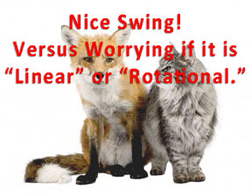
#MVP | “Nice Swing,” Versus Wondering if it’s Linear or Rotational!

I am guessing some of the best all-time hitters Ty Cobb, Rogers Hornsby, Stan Musial, Honus Wagner worried more about the Results than a Mechanical Dissection of what it took for each of them to get those results.

Bruce Lee said, “If you spend too much time thinking about a thing, you’ll never get it done.

bl

All three are adjectives, Nice, Linear, and Rotational, but I am sure you realize only one is describing the results. The other two are spending way too much time discussing what it takes to get the results versus what comes natural. Because a natural swing follows the natural laws of physics, making the swing easy to repeat.

It is my assertion we spend way too much time debating the mechanics of how [e.g., Linear versus Rotational] and very little time discussing things like pitch selection and what it takes to hit the baseball.

In fact, Rory Sutherland, advertising guru, stated we have actually become completely disconnected with what actually matters to people. In simpler times, [e.g., pre-digital video] they were focusing on hitting, where as now we are bombarded with videos designed to justify that Stan Musial was a Linear or Rotational hitter; An attempt to validate why their style, their approach to hitting, will make you a better hitter.

Yet the only natural result from watching big league hitters over and over is the painful time wasted viewing your own videos designed to point out what you are doing wrong. Instead of helping, we mechanically dissect and critique every movement. Mentally rehearsing over and over, in slow motion, forwards, backwards, all about what we are doing wrong.

The icing on the cake came when a parent called and asked, “Do you teach Linear or Rotational Hitting?” I just shook my head and said, “it’s is much simpler than that!”

Aesop’s fable “The Fox and the Cat,” comes to mind. When it comes to hitting, focus on the results, and most of all, Keep it Simple!

So when it comes to Hitting, are you the Cat or are you the Fox?

Until next blog be like Pete, Pete Rose that is. “See the ball; hit the ball.

Head-Shot-for-Newsletter-Smaller

Al McCormick

Categories
Blog

#MVP | Did You Say, “Wait Longer?” I Have a Question For You!

Early in my coaching career I too fell trap to teaching those same words when teaching kids to hit the ball on the outer half of the plate. It wasn’t until my 10-year-old son asked a question, a trait that seems lost with the older players, in much the same way we believe younger players do not have the ability to stay focused.  Now Psychology Today describes this inability to ask questions as adolescence and is tied to the their strive for independence and self-identity. Or is it what psychologists call the illusion of truth effect; created by repeating something over and over again.

A technique Used in Commercials, politicians, and, yes, by baseball coaches!

The more we say or hear something, the more familiar we become with it, then, what psychologist call cognitive fluency, happens. We here it over and over and over again, so therefore we mentally force ourselves to believe it must be true. To hit a baseball on the outer half of the plate you need to let it get in on you, wait longer, then take it the other way.

A coaching flaw my 10-year-old son opened my eyes too just by asking a simple question. He asked, “How long do I wait?

Half hearing his question I repeated verbatim what I had told him the first time. Pitches on the outer half of the plate, “let it get in on you, wait longer, then take it the other way!” Fighting this so-called cognitive fluency I was attempting to impose on my son, he asked again, “Dad, how long do I wait?

As if he was waking me up from a deep sleep I realized it was me who had fallen trap to cognitive fluency. I was repeating something; something I had heard over-and-over again; something that truly was a fallacy; yet is something every coach is likely to blurt out at every practice and/or game as if it was factual. So therefore it must be true!

My son’s question made me realize, especially before I share knowledge with others, I needed to truly understand what in the heck I talking about. What I was spreading, what I was teaching, was nothing more than an opinion, and as Plato said, an “Opinion is the medium between knowledge and ignorance.”

Now I know ignorance is a tough pill to swallow as a coach and worse for a player who just accepts opinions while attempting to be successful at the simple game of baseball. So, if I may, the simple fix is to ASK QUESTIONS! Make sure you understand every aspect of why the instructor is sharing this knowledge with you and why it makes you a better player. If they can’t answer your question, be respectful, and then move on. You have gained as much knowledge as you can from them.

Remember your goal, especially if you want to go far in the game of baseball, is to become YOUR OWN COACH! That can only occur with knowledge and understanding.

I am pleased to admit the answer to my son’s question resulted in a book; Hitting is Simple…Have You Figured it Out Yet? You can find it for the iPad, Kindle or if you prefer, you can download an Audio Version from my website. CLICK HERE.

HIS-Front-Cover-for-Web wo Price

Until next blog, learn to “Ask Why!”

Head-Shot-for-Newsletter-Smaller

Al McCormick

Categories
Blog

#MVP | No-Step, One-Step; Not A Dance Move, It’s The Backhand

Call me old school if you like, but for the majority of routine grounders I believe an infielder should surround it and come through the baseball. So, when I discuss the backhand, I mean fielding the ball that is hit deep in the hole.

To me the backhand, whether you use the No-Step or One-Step approach, is anything but routine. Done correctly, the backhand can and usually is spectacular! As smooth and eloquent as the Blue Danube Waltz. Visualize the second baseman fielding the ball behind second base or the SS taking away a sure single deep in the 5-6 hole. A thing of beauty requiring a quick and accurate throw to ensure the out.

Now for some terminology clarification: No-Step or One-Step refers to the placement [e.g., what to do] of your right Right Foot based upon it’s positioning the moment you catch the ball. You either take one step to position your power leg to make an accurate throw, or you are already in position on your power leg to make a perfect throw.

The art of fielding the baseball is the same for both. Arm extended out and away from your body to provide you with what doctors call manual dexterity, [e.g., arm freedom to move up/down/left/right], forcing the player to elevate their head [versus looking straight down] to see the whole field peripherally and allow them the opportunity to react appropriately [e.g., the runner going home falls down].

No-Step

  • You are in position to backhand the baseball with your weight already on your right power leg.
  • You stop and pivot your front leg in the direction you are throwing [e.g., presumably first base].

With your weight on your throwing leg, you could wrist the ball almost anywhere if needed.

Derek Jeter was one of the best at backhanding a baseball. Here’s one he is in position to make a No-Step Backhand on a ball in the 5-6 hole.


dj_bh

One-Step

  • You are in position to backhand the baseball on your front leg
  • You stop, pivot and place your back leg down in-line with the direction where you need to throw the baseball [e.g., presumably first base].

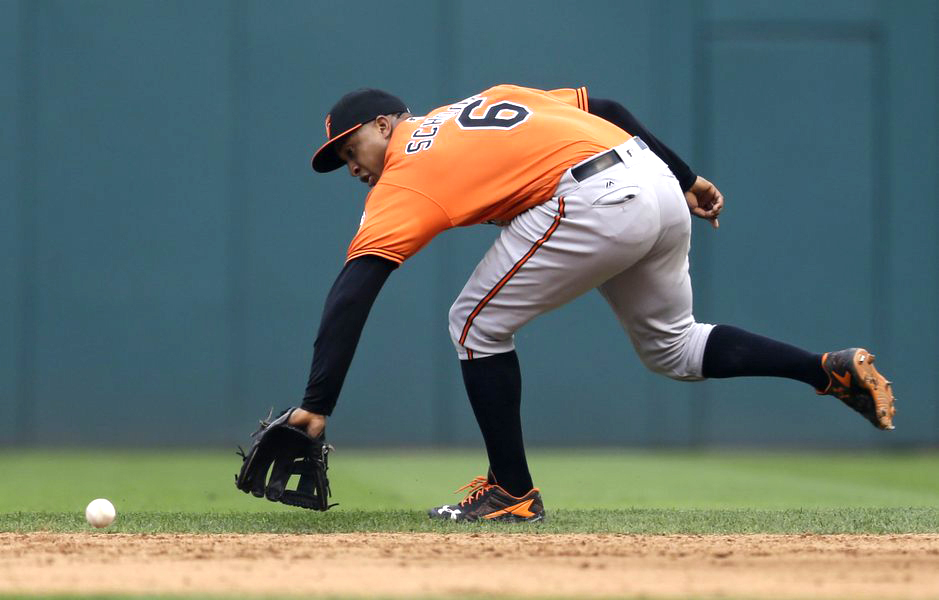
Jonathan Schoop, a future superstar, fielding a ball up the middle and in position to make a One-Step Backhand.


js_bh

As I mentioned earlier, when done correctly the backhand is as smooth as the Blue Danube Waltz. So I couldn’t resist; enjoy


Until next blog footwork is the key,

Head-Shot-for-Newsletter-Smaller

Al McCormick

Categories
Blog

#MVP | Yelling At The Umpires – Example of Bullying

The umpire is defined as the person in charge with officiating the game. In many cases they are just an individual who has volunteered because they love the game of baseball. Fans who are willing to take a ton of grief and work for pittance [e.g., 3 hours work plus the drive back and forth].

After the nervous pre-game pleasantries are exchanged between opposing families and fans, Good Luck – Good Luck! The game begins.

We’re happy to get the game started and all is fine from the moment he yells, Play Ball! That is UNTIL something happens.

  • A runner called out on a close play
  • A third strike in a critical situation

A transformation occurs. The families and fans instantaneously morph into defacto umpires. Umpires who saw the play differently and feel the need to vocally share their displeasure; after all they had a better angle sitting in the stands 50 feet away.

Whatever the emotion, the swell of complaining grows from the parents who felt a bit embarrassed then simultaneously expands to all the parents, the coaches, and eventually the players. All feeling the need to let the umpire on the field know he blew it!

The one individual who is in charge with officiating the game is attacked from every angle of the field in a mob like fashion. Escalating from being upset over a single call, to questioning his integrity, calling him names, to threatening him personally. Bullying!

Worse, just think of the lessons we are sharing with each explicative directed at one individual in front of all the young ears. Attacking one individual as a mob just because they disagree with them. No different than kids bullying kids.

“Do as I say, not as I do,” doesn’t get it.

Until next Blog be a good example and be a good sport versus showing how to be a bully,

Head-Shot-for-Newsletter-Smaller