Categories
Blog

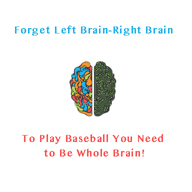
#MVP | Forget Left Brain-Right Brain. To Play Baseball You Need to Be Whole Brain

Whether you believe it is 85%, 90%, or 100%, I think we all agree baseball is a mental game. Aside from the fact that most players and teams dedicate 100% of their practice time trying to improve what amounts to 15%, 10%, or for some 0% of what it takes to play the game. I wanted to share my thoughts regarding a discussion that took the mental aspect of baseball to a whole new level.

Do we need to become better coaching a mixture of “Left Brain” and “Right Brain” players? Huh?

Hold on! Before you throw up your hands and cursing this is just another millennial entitlement conspiracy, Roger W. Sperry was awarded the Nobel Prize in 1981 for this. So, let’s at least look at what psychologist are saying?
Left Brain

Right Brain

Detail Oriented Big Picture
Logical Random
Sequential Intuitive
Facts Rule Imagination Rules
Cautious Risk Taking

As I scan over the respective adjectives mentioned above and applied them to certain players who excelled in certain situations and while others seem to fail. Hmmm, they may be onto something with this Left Brain-Right Brain Theory.

Left Brain – Too Cautious and over Logical? The player who consistently was thrown out stealing for fear of getting picked off, or the batter who struck-out with the bases loaded hoping for a walk.

Right Brain- Intuitive with a touch of Risk Taking? The player who consistently took an extra base on a ball hit to the outfield, or the player who lays down a bunt for a base hit because he noticed the third baseman was playing too deep.

Then, as if it was yesterday, I remembered that same successful player I defined as Right Brain getting thrown out late in the game trying to stretch a double into a triple. What was worse, he made that running mistake when there were no outs. I guess I wanted him to be that Right Brain person, who, once he hit the baseball, ran the bases as if he was Left Brain.

Does that mean I only want Left Brain players in the game during the late innings? But what if the other team is throwing a lefty and my Left-Brain players bat left handed? Whew, talk about paralysis by analysis!

Now what am I going to do?

Nothing!

Psychologist Kendra Cherry saved the day stating “the idea of right brain/left brain thinkers has been debunked,” and neuroscientist now “know that the two sides of the brain collaborate to perform a broad variety of task and that the two hemispheres communicate…”

I feel a whole lot better just knowing the game of baseball is one enjoyed by those who have learned to Think without Thinking. Just ask Mikey Rivers.

He explains the game of baseball in terms we all can understand!

Pitching is 80% of the game and the other HALF is hitting and fielding.

Until next Blog,

Al McCormick

Categories
Blog

#MVP | Four Words To Avoid, “If I Had Known…”

Four Words You Never Want To Say, “If I had known…”

This is a true story a Division I Recruiter shared with my team.

A very proud grandmother, who worked in his Athletic Department, was consistently bragging about her grandson to the Head Recruiter. Confidently sharing article after article in an attempt to assure him her grandson was a can’t miss!

Nothing ventured, nothing gained, so he made a few phone calls to coaches in the surrounding area. Sure enough, grandma was right. Her grandson was very talented and worth taking the 300-mile trip. So in passing during the morning meeting he told her, “he was going to check out her grandson.” Thank You, Thank You, she was beside herself.

He arrived a day early, just as he always did, to introduce himself to the player and to the coach. From the moment he locked his car door and walking to the ball field, he heard the kid’s name 5-6 times. He stayed 10 minutes, then left. Never introducing himself to the Coach nor the Player.

A couple days after he returned, the player’s grandmother stopped into his office to drop off more articles and to brag about another great game her grandson had. Before she could finish, he let her know he had scouted her grandson. “Oh, she moaned,” as she reached for the chair to sit down. No doubt he is a very talented baseball player, he assured her, but he was a pain in the butt during practice. Goofing off and causing the coaches to stop practice several times in the short 10 minutes he was there. He just did not believe he respected the game enough, much less viewed practice as an opportunity to improve. He was just too much maintenance to play here.

Noticing her embarrassment, he assured her again, he is a very talented baseball player who will play college baseball. He is just not a good fit in their program.

About a week later the player’s grandmother approached the Coach in the lunchroom apologetically. She said her grandson had called wondering when her school was coming to see him play. She sadly told him, he already did, then proceeded to share what the recruiter saw.

Why didn’t you tell me he was coming to see me play? If I had known…

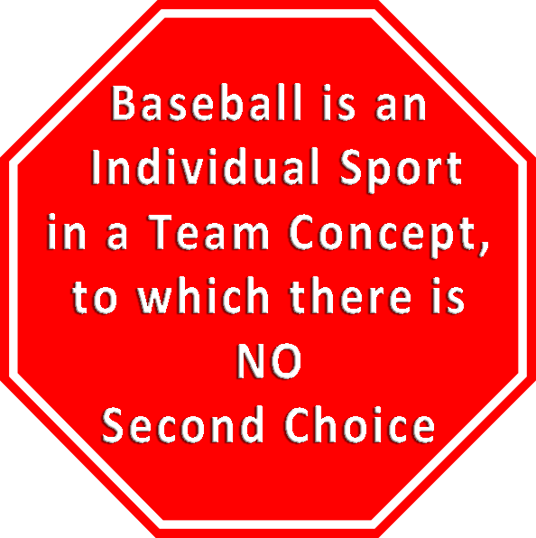
I love this game, but you need to remember, baseball is an individual sport in a team concept, and in many cases unforgiving.

Respect it and it will Respect You!

Click Here and let Most Valuable Player help you and your son always put their best foot forward. Helping him to understand what it takes to be a better player and to respect the game of baseball.

Until next Blog,

Head Shot for Newsletter Smaller

Al McCormick

Categories
Blog

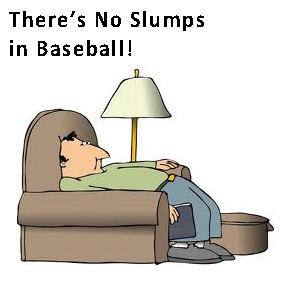
#MVP | There’s No Slumps in Baseball!

We have all heard Thomas Edison’s quote, “I have not failed; I’ve just found 10,000 ways that won’t work.” Misusing the word Slump is another.

Unfortunately too many of us use the second definition of the word “slump” is used more than the first, and is tied directly to sports. Some might even say it is tied directly to baseball, especially when you have had several bad outings. Even ESPN describes, “…a slump [as] a feeling unique to baseball.” Those who believe in them truly believe it is an adjective, however it’s actually a verb, “leaning over with a bent back.” I believe slump as an adjective is an excuse we use to justify why we are not doing well. The “S” word stated with your head tilted down is a right of passage believing, once we admit it, all is forgiven. “I would have … but I am in a slump.” C’mon, “I ‘m in a slump” is no different than “My Bad.” It’s just spelled differently!

I apologize for the sarcasm, but the one thing I have learned over my 20 plus years coaching, if you don’t change anything nothing changes. Unless you are planning to be in this slump for a long time! Glenn Moore said, “you need to identify what is wrong before you can fix it.” So instead of convincing yourself, use knowledge to set you free. Find out why something didn’t work, then fix it! Ryan Holiday states, “Things that we think are obstacles are actually opportunities to do something.” Check out his Nine “9” Essential Habits and Practices of Mentally Strong People.

The Nine Essential Habits and Practices of Mentally Strong People

They see things objectively.

Your perception of the situation – truly understand what just happened versus accepting the failure. Recognition is a powerful tool!
Identify solutions – Once you recognize your failure layout a plan to fix it. Use the knowledge you already have to resolve it immediately [e.g. next pitch, next swing]
Approach – Reaffirm what you already know by yourself. If you need more, [don’t go running for a hitting or pitching lesson] reaffirm what you already know with your mentor by calling them over the phone. Work on it on your own.

They let go of entitlement.

Drop the belief you deserve to get what we want, [guaranteed spot in the line up every day] and it will make it easier for you to deal with challenges, especially those that take you by surprise.
Mentally strong people recognize that their entire life plans, and life itself, could be derailed at any moment – and they don’t waste their effort feeling wronged by destiny when things don’t go their way. Simply put…Keep working hard everyday.

They keep an even keel.

Keeping a cool head is an enormous asset when it comes to dealing with challenging situations. Instead of throwing your bat when you strikeout, or impress [NOT] the stands with an explicative when you give up a bomb, recognize why something happened and fix it next time.

They don’t aspire to be happy all the time.

Mentally strong people don’t try and avoid negative emotions – Accepting both positive and negative emotions…is [the] key component of resiliency

They are realistic optimists.

Mentally tough people make a habit of getting up after they fall. Do You?
Mentally tough people have the hopefulness of optimists and the clarity of pessimists…gives them both the motivation and critical thinking required…to come up with solutions

They live in the moment.

You can call it being in the zone, you can call it whatever you want, but the idea is that if you’re focused exclusively on one thing in front of you, you are…considering only the variables that matter.
Glenn Moore recommends the “Yes…but theory.” Water the hiccup down by recognizing it, then eliminate the emotion with the strongest word in the dictionary, BUT. [e.g. Yes I just struck-out, but I got to see every one of his pitches, pitches I can hit, and I will be ready next at bat.]

They’re persistent in pursuit of their goals.

Perseverance is one of the most fundamental qualities of resilient people. Angela Lee Duckworth said it is, “more than any other single quality [IQ, emotional intelligence, good looks, physical health].
Perseverance to make that future a reality

But they know when it’s time to let go.

The ability to recognize that you can control only your own actions – not the results of those actions.
He hit your best pitch; That pitch was nasty and fooled you; Even though you were right on it, he made a great play in the field. Mentally, tip your hat and move on.

They love their lives

You can find the joy in not just accepting, but embracing the things that happened to you.
[Be] grateful and appreciative of obstacles because of the simple fact obstacles are life itself.
Author Jane Lotter, shortly before her death put it, “May you always remember that obstacles in the path are not obstacles, they ARE the path.”

Make Pact with yourself –

From this day forward I will only use the word slump when describing someone’s posture. [e.g., …slumped over.]
Step across the lines and apply Ryan Holiday’s 9 essential habits
View hiccups as opportunities to get better.

 So here are my Recommendations:

  1. Pick up Ryan Holiday’s Book: The Obstacle Is the Way http://www.amazon.com/The-Obstacle-Is-Way-Timeless/dp/1591846358
  2. Listen to the audio book –  Handbook for Success by Glenn Moore
  3. Check the Video Blog: Perseverance; Does This Describe How You Play the Game?

Until Next Blog,

Head-Shot-for-Newsletter-Smaller

Al McCormick

Categories
Blog

#MVP | In Baseball Avoiding Failure Avoids Learning

Ever watch batting practice? It’s as if the goal is to not to miss a baseball versus improving some aspect of their swing. Fair enough, being called Batting Practice does create an image the exercise is about physically loosening up your swing. Which is why I believe most hitters fail to improve during batting practice. They refuse to be embarrassed by missing or mishitting a baseball.

Brene’ Brown states “Lean into the discomfort” and “Embrace vulnerability.” When you acknowledge your vulnerability [e.g., what you’re afraid of] presents the opportunity to fix whatever needs fixin!

  • Hitting the Curveball or for Power
  • Improving your Pop-Pop Time
  • Hitting your Spots with a particular Pitch
  • Turning the Double Play
  • Diving for the baseball

Unfortunately knowing what we need to work on is the time most tend to shield their vulnerability. Especially if they believe a weakness opens them up to attack, or a possibility of not playing or making the team. This is where we are avoiding failure, and therefore, we are avoiding the opportunity to learn. We can tell ourselves we will fix it later, or convince ourselves hiding the weakness is simpler than trying to fix it right now, but in both cases, we are wrong!

The first step to fix anything is accepting your vulnerability [e.g., knowing what you don’t know or what you’re afraid of] by spending time understanding what it takes to reduce the weakness, then trust your brain! Your brain is a success oriented organ and once filled with knowledge, let it take over and be confident your brain will help you figure it out.

My brain is in complete control of my body.

Until next blog identify a weakness, understand what it takes to reduce the weakness, then keep failing until you figure it out!

Al McCormick

Categories
Blog

#MVP | Baseball – Do YOU Interleave Your Practices?

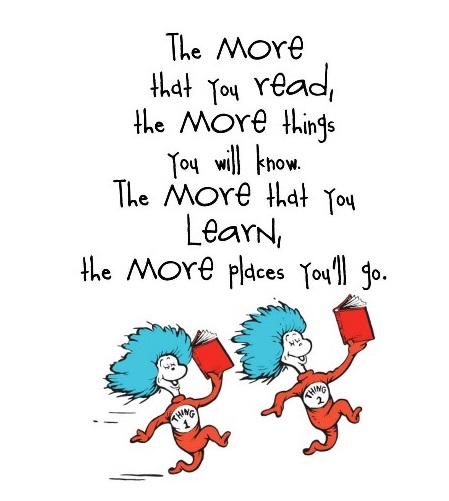
Dr. Seuss said, “The more that you read, the more things YOU will know. The more that YOU learn, the more places you’ll go.

I would add, the more YOU apply what you’ve learned, the further YOU will go. The operative word is “YOU!” Meaning, YOU have to recognize YOU, and YOU alone must become YOUR Own Coach.

It is true knowledge comes from multiple sources [e.g., reading, mentors, coaches, family members], but it is YOUR responsibility to

  • Decide what is Valuable and Make it Your Own
  • Decide what is Not-Valuable and Ignore

A responsibility that is used to answer both of these decisions is based upon YOUR knowledge gained through reading, learning, and applying this knowledge during YOUR practice or while YOU are playing the game.

Which leads to the important question;

Once YOU have decided what YOU have learned is Valuable, What method of Practice helps YOU make it YOUR OWN quicker?

Practicing it Over-and-Over-and-Over…NOPE

For those of you who are saying, huh; it is my guess you are the ones who misinterpret the story of a phenomenal player who is said to have gotten that way taking 500 swings a week. According to Dr. Christine Carter, Repetition is not the way our brains work – We react to Change. Taking 100 swings a night may create a form of muscle memory [e.g., unconscious process], but that is all it does.

Muscle Memory is one of those “don’t confuse movement with accomplishing anything.”

At best, taking 100 swings a night is a form of learning identified as Habituation. We become a ROBOT and mentally stop responding to what we are being taught, because we somewhat mentally determine it is no longer relevant.  Dr. Robert Bjork (PhD, Psychology Stanford) defines the approach of doing the same thing over-and-over again as Block Practicing.

Implementing an Interleaved Practice Helps YOU Apply What YOU have learned

An Interleaved Practice Schedule involves implementing a RANDOM structure to what YOU are trying to improve on. Helping YOU to improve as a HITTER, versus just the muscle memory of a proper swing. Interleaved Practice still requires knowledge from reading, learning, and application, but once you have the knowledge the random practice schedule gives you so much more. In fact Dr. Bjork states, not only will you learn better, but what you have learned will be stay with you [game-after-game-after-game.]

It is worth noting the Random Practice approach may lead to what appears to be a poorer practice performance [e.g., randomness makes it harder], but translates to a superior performance during game time. Think about it, how many times have you said, “I don’t understand why I am not hitting; I took 100 swings at the batting cage before the game today.”

Here’s an approach to try next time YOU Practice Individually.

Hitting Fielding Pitching
Take BP swinging at a Fast Ball, Curve, Fast Ball, Change, Fast Ball… Field a grounder to Your Left, Field a Back-hand, Field a grounder to Your Right, … Throw a Fastball Inside, Break a Curve to the Outside Corner, Throw a Change on Inside Corner…

I believe you will find Dr. Robert Bjork’s video very interesting and worth mentally implementing into YOUR Interleaved Practice Approach IMMEDIATELY.


So until next blog, remember what Ben Franklin said,

Tell me and I forget, teach me and I may remember, involve me and I learn.”

Al McCormick

Categories
Blog

#MVP | Your Actions Are So Loud, I Can’t Hear What You Are Saying

I want to play college baseball and eventually get drafted, are words heard I often hear.

Yet, when asked a specific questions as to how? Most players robotically respond as if you spoke in another language and they mistranslated what you said.

Cosa stai facendo in proposito?

  • Nothing really matters until I am a junior
  • I will attend a lot of showcases, a college will find me there
  • My coach is really connected
  • There’s a place for me to play

Excuse me, the question was, “What are you doing about it?” Oh, sorry, my bad!  I misunderstood.

  • I play for a very good summer select/travel team
  • I have started for my high school team since I was a sophomore
  • My batting average is over 300 in high school
  • I hope to make All-State or All-County this year

Again, missing the Operative word. What are YOU doing about it?

Your Actions Are So Loud, I Can’t Hear What You Are Saying

Whether you buy into Malcom Gladwell’s belief it takes 10,000 hours to be good; YOU have to realize YOU need to ensure YOU are spending time improving. Not just on what you are already good at, but identifying your weaknesses and reducing them. Louise Penny said, “Life is change. If you aren’t growing and evolving, you’re standing still, and the rest of the world is surging ahead.”

I am not against playing video games, but you need to know you are fooling yourself spending more time playing video games versus working on Academics, getting Bigger, Faster, and Stronger. The simple recipe to being GOOD and defining what it takes to get where you want to go. The things you need to focus on; the things you need to describe in detail when someone asks the question, what are you doing about it.

Improving Your Grades

Getting Stronger

Getting Faster

How hard, how often, and how effective. Whether you believe it or not, it is YOUR CHOICE!

So again, I ask the question, What are YOU doing about it?

Next week’s blog I’ll recommend an approach to practicing effectively.

Al McCormick

Categories
Blog

#MVP | Baseball Confidence? Fake It Until You Become It

“Do you believe you can play professional baseball?”

This is a question most of us are mentally asking ourselves starting with our success at “T-Ball,” or at least around the age of 12. Influenced by parents and others around you.

According to Ivy League author, Erika Casriel, “…confident people deliberately learn specific skills.”

  • Recognize increased activation is not a sign that your failing, but that you want to do well and your body is ready to help.

When you notice the adrenalin to step up as it gets closer and closer to your turn, accept it as your body telling you it’s ready. Take a deep breath and mentally focus on the knowledge you have stored in your brain, talk to yourself (stating what you expect), then let your super computer take over.

  • Establish an allegiance to a larger cause makes your worries more tolerable

It is more than a single at-bat, pitch, or defensive play. Emotionally we can convince ourselves giving up a game winning homerun, striking out, or making an errant throw dictates the rest of our career. This is where you need to remember, baseball is a mental game, not an emotional one.

  • Tackle your fears head on, and once you make it through, your original goal no longer worries you.

This sounds more philosophical than it really is. First we need to set instant gratification aside, and truly realize failing is what it takes to improve. So next time you fail, focus on what you did well on. The improvements you are making each time. It’s all about the steps to success. Remember our brains are success oriented organs just looking for knowledge/guidance to what and how you define Success.

We decide! We decide on how and what we believe the results should look like. We decide on how we react to the results. Did we personally learn something from our hiccup, or were we more worried about what everyone else is thinking? A non-verbal behavior that dictates our future outcomes. Body Language.

What is your body language telling you, as well telling coaches, players, scouts, parents and friends?

Amy Cuddy, professor at Harvard Business School, believes body language not only affects how others see us, but it can change how we see ourselves. She stated:

Our bodies change our minds

…and our minds change our behavior

…and our behavior changes our outcome

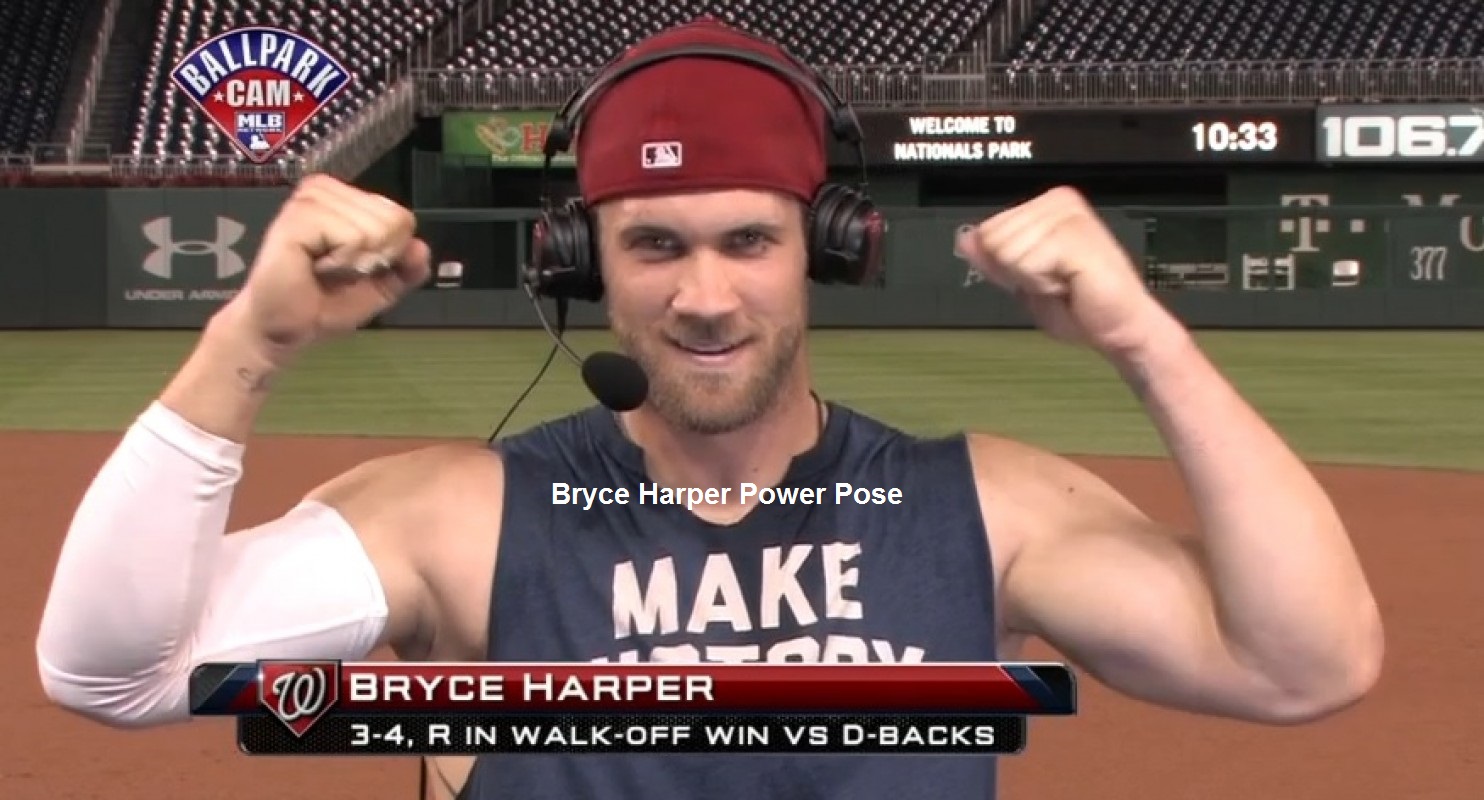
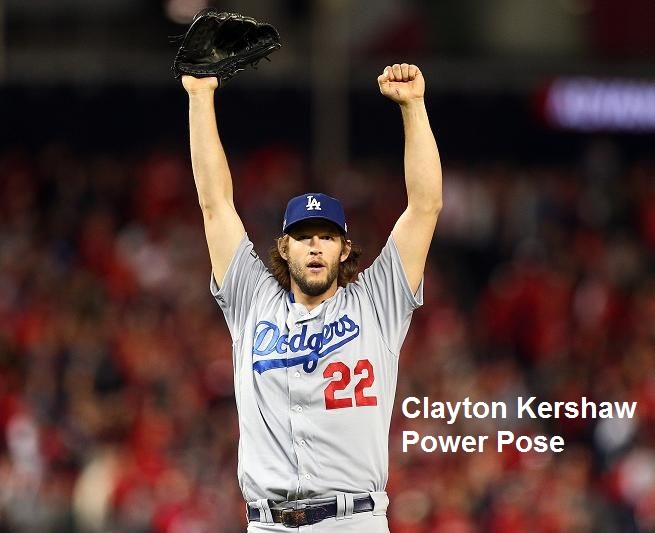
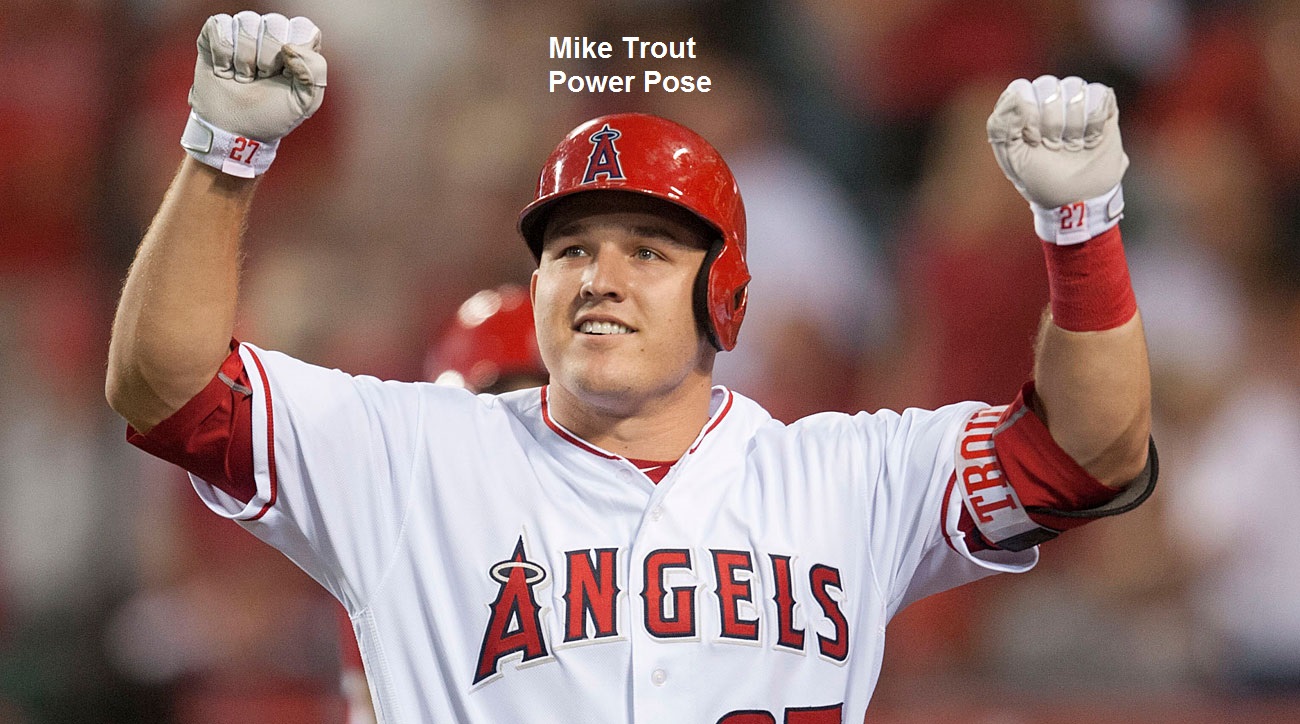
So, before you are asked to perform, visually remember all your hard work and knowledge, then mentally see yourself succeeding. Finish with a Power Pose. Maybe a shake of a fist telling yourself, “I got this!” or why not copy what the winners do. Then make it happen!

Even if you are scared, according to Ms. Cuddy, tiny tweaks results in big changes. So, “Fake it until you become it.”

Until next blog

Al McCormick

Categories
Blog

#MVP | Is Baseball Your Gift?

Before you answer the question, I believe you must recognize it took more than talent for those who made it, to get where they wanted to be in the game of baseball .

Ken Page, Clinical Social Worker, explains that our core gifts are always trying to get us to listen, sometimes in a gentle whisper, sometimes in a painful shout. As long as we are alive, they will be waiting for us to love and accept them, and to finally give them their freedom.

Is Baseball Your Gift?

To eliminate all the “what if’s” that cloud your attempt to clearly and honestly answer the question, “Is Baseball Your Gift,” Steve Olsher, author of “What is Your What?” identified six questions that cut-to-the-chase.

  • Even if you didn’t get paid a cent for it, would you still do this?
  • Would doing this inspire you every day?
  • Does doing this come as naturally to you as breathing?
  • Do you feel you’ve been given a special gift to do this?

NOTE: Keep in mind that while you might not yet be a master of [baseball], if you feel passionately about it and/or spend a lot of time engaging in it, you may have been given a special gift to do it. In such cases, your answer to Question No. 4 is likely to be yes.

  • Does time seem to fly by when you’re engaged in this activity?
  • Can you possibly make money doing this?

NOTE: Base your answer on whether you can possibly make money [playing baseball], not whether you’re currently doing so. If you have a genuine gift, you can monetize virtually any hobby, interest or endeavor. Therefore, your answer would be yes.

Steve Harvey said, “the thing you do at your absolute best with the least amount of effort,” is your gift.

Life is a One or a Zero, which means when you focus on the questions and ignore what everyone else thinks, answering them are easy! The answer is simply either a Yes or a No.

Including the question the main question, “Is Baseball Your Gift?

Until Next Blog,

Al McCormick
Categories
Blog

#MVP | Maybe it’s Time We Consider Keeping Christmas

I heard Henry Van Dyke’s 1924 poem, “Keeping Christmas” for the first time tonight and I believe if you want to be a Quality Baseball Player, then you first need to be a Quality Person!

Maybe it’s time we consider, “Keeping Christmas for more than a day. Why not always?


Keeping Christmas

-By Henry Van Dyke

But there is a better thing than the observance of Christmas day, and that is, keeping Christmas.

Are you willing…

  • To forget what you have done for other people, and to remember what other people have done for you;
  • To ignore what the world owes you, and to think what you owe the world;
  • To put your rights in the background, and your duties in the middle distance, and your chances to do a little more than your duty in the foreground;
  • To see that men and women are just as real as you are, and try to look behind their faces to their hearts, hungry for joy;
  • To own up to the fact that probably the only good reason for your existence is not what you are going to get out of life, but what you are going to give to life;
  • To close your book of complaints against the management of the universe, and look around you for a place where you can sow a few seeds of happiness.

Are you willing to do these things even for a day? Then you can keep Christmas.

Are you willing…

  • To stoop down and consider the needs and desires of little children;
  • To remember the weakness and loneliness of people growing old;
  • To stop asking how much your friends love you, and ask yourself whether you love them enough;
  • To bear in mind the things that other people have to bear in their hearts;
  • To try to understand what those who live in the same home with you really want, without waiting for them to tell you;
  • To trim your lamp so that it will give more light and less smoke, and to carry it in front so that your shadow will fall behind you;
  • To make a grave for your ugly thoughts, and a garden for your kindly feelings, with the gate open—

Are you willing to do these things, even for a day? Then you can keep Christmas.

Are you willing…

  • To believe that love is the strongest thing in the world—
    • Stronger than hate, stronger than evil, stronger than death—
    • And that the blessed life which began in Bethlehem nineteen hundred years ago, is the image and brightness of the Eternal Love?

Then you can keep Christmas. And if you can keep it for a day, why not always? But you can never keep it alone.

After Every Blog, KEEP Christmas !

Head-Shot-for-Newsletter-Smaller

Al McCormick

Categories
Blog

#MVP | When It Comes to Baseball; Who Is Your Hero?

Michael Jordan, when being cut from varsity his sophomore year in high school said, “I knew I never wanted to feel that bad again.” Most of us during our careers, athletic or corporate lives have witnessed that same feeling.

The real question is, “What did you do about it?”

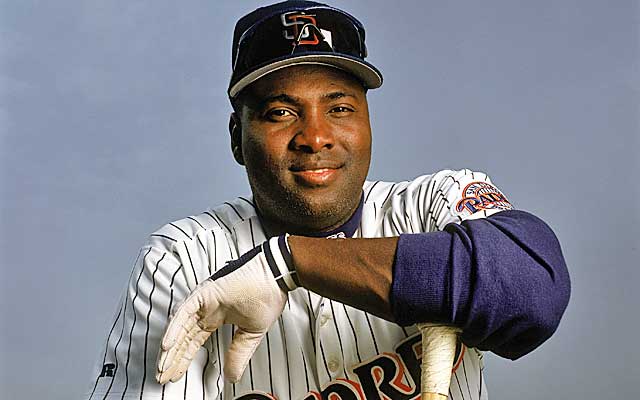
Too often we fall trap trying to copy the Outcome of others, versus understanding what it actually took to gain the particular outcome. Example: Many view Tony Gwynn as one of the best hitters, but less seem to recognize the fact he made himself a great hitter by truly understanding what it takes to hit well, then worked at it every day. Every Day! He studied pitchers and was constantly talking to other players, both pitchers and hitters. He truly understood what it took to be good, so when he failed, he knew what to do to fix it. Do you?

tgwynn
No doubt Tony Gwynn was a great baseball player and from those who knew him, he was greater as a person. I will tell you, you are fooling yourself if you think he is your hero, especially if all you want to do is hit like him. It is important to understand, holding someone in the highest esteem is not going to improve you as a player. You just admire him! The ancient Greeks had a saying, “Tell me who you admire and I will tell you who you are,” but it won’t make you a better ball player.

  • Maybe you admire Tony Gwynn or another ball player; someone playing in the major leagues today or a superstar from the past.
  • Maybe you admire a coach; someone who believed there is more in you.
  • Maybe you admire your parents; after all they were there when you did well, and during your difficult times.

I agree, admiration is a personal thing and confess these are mine, but it takes more than admiring someone who is great. It takes understanding of everything there is to know about this game, then implementing the same work ethic of those you admire. Denis Waitley, Writer and Motivation Speaker said, “The extra energy required to make another effort or try another approach is the secret of winning.” Once you apply the same energy of those you admire, you will realize what it takes to be great is in you.

matt-m
Matthew McConaughy [actor] identified who our hero should really be during his Oscar acceptance speech.

“…Now when I was 15 years old I had a very important person in my life come to me and say to me, “Who’s my hero?I don’t know, I got to think about that. Give me a couple of weeks.

I come back in two weeks later and this person comes up and says, “Who’s your hero?

I said, I thought about it, you know who it is, it’s me in 10 years.

So I turned 25, ten years later, and that same person comes to me and goes, “Are you a hero?

I was like, not even close. No, no, no, he says, “Why?” my hero is me at 35.

So you see every day, every week, every month, and every year of my life, my hero is 10 years away. I’m never going to be my hero, I am not going to attain that, I know I am not.

That’s just fine with me, because that keeps me with somebody to keep on chasing.”

mirror

So, before looking for help from others you admire, gain an understanding of the game, then take a look in the mirror.

Learn to become your own Coach!

And Chase Your Hero!

Until next blog,

Head-Shot-for-Newsletter-Smaller

Al McCormick