Categories
Blog

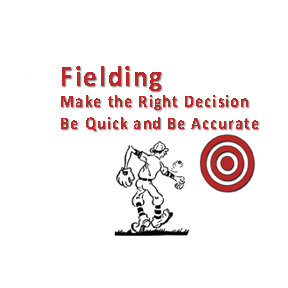
#MVP| Fielding – Make the Right Decision, Be Quick and Be Accurate

Emphasize a quick and accurate release versus Soft hands. After all isn’t it about getting outs. I witness too many players looking pretty, following the ball into their glove, collapsing their glove and ball into their stomach [ensuring soft hands] only to shuffle, shuffle, tap, tap the ball into their glove then throw.

It does look pretty, but it also tends to make the play close leaving the decision in the hands of another human being; the umpire. I have actually seen a kid beat out a grounder to second while the 2B habitually went through his “soft hand-tap-tap” ritual before he threw it.

Taking too much time is just half of it. Most will follow the ball into their glove as they bring their glove into their stomach, which causes them to tilt their head down, losing sight of everything going on around them. Including the runner who just hit the ball and along with every runner on base. Did they fall? Are they attempting to take an extra base or even score a run? With their heads tilted down they will never know.

Recommendation: Present your glove as the pitcher goes into his wind-up, glove open, extending your arm out and in front of your body as you slowly take a step to a step and a half towards the hitter.

  • Keep your glove and eyes looking forward as you move through the ball, allowing your brain to:
    • React and catch the ball. Arms extended away from your body offers a player more freedom to react to bad hops.
    • Use your peripheral vision to react to situations happening in real time. Arms extended away from your body keeps your head up allowing you to react to a base running error or possibly prevent a run from scoring.
    • Surround the ball and come through it, which automatically aligns your front shoulder in the direction you want to throw the baseball. This ensures a quick and accurate throw every time.

It is true a player must be aware of the situation and play accordingly, but with only 21 or 27 outs in a game the worse scenario is to give the other team an extra one on what should be a routine play. So be mentally aware, and play the ball prepared to react to a mistake by the other team. Again, the ultimate goal is to get an out and do so quickly and accurately.

Until next Blog,

Head Shot for Newsletter Smaller

Al McCormick

Categories
Blog

#MVP| Mentally Strong Enough To Play This Game?

We have all heard baseball is a mental game, yet very few players understand what it means, much less how it will benefit them. Instead, too many players transfer blame or spend way too much time explaining why something did not happen, which is why I liked the way Amy Morin defined Mentally Strong People.

Want success? Integrate Amy’s points into your game; so much so, this is how someone would describe you to a college coach or a professional scout!

 13 Things Mentally Strong People Don’t Do

 They manage their emotions, thoughts, and behaviors in ways that set them up for success in life. Check out these things that mentally strong people don’t do so that you too can become more mentally strong.

1. They Don’t Waste Time Feeling Sorry for Themselves

Mentally strong people don’t sit around feeling sorry about their circumstances or how others have treated them. Instead, they take responsibility for their role in life and understand that life isn’t always easy or fair.

2. They Don’t Give Away Their Power

They don’t allow others to control them, and they don’t give someone else power over them. They don’t say things like, “My boss makes me feel bad,” because they understand that they are in control over their own emotions and they have a choice in how they respond.

3. They Don’t Shy Away from Change

Mentally strong people don’t try to avoid change. Instead, they welcome positive change and are willing to be flexible. They understand that change is inevitable and believe in their abilities to adapt.

4. They Don’t Waste Energy on Things They Can’t Control

You won’t hear a mentally strong person complaining over lost luggage or traffic jams. Instead, they focus on what they can control in their lives. They recognize that sometimes, the only thing they can control is their attitude.

5. They Don’t Worry About Pleasing Everyone

Mentally strong people recognize that they don’t need to please everyone all the time. They’re not afraid to say no or speak up when necessary. They strive to be kind and fair, but can handle other people being upset if they didn’t make them happy.

6. They Don’t Fear Taking Calculated Risks

They don’t take reckless or foolish risks, but don’t mind taking calculated risks. Mentally strong people spend time weighing the risks and benefits before making a big decision, and they’re fully informed of the potential downsides before they take action.

7. They Don’t Dwell on the Past

Mentally strong people don’t waste time dwelling on the past and wishing things could be different. They acknowledge their past and can say what they’ve learned from it. However, they don’t constantly relive bad experiences or fantasize about the glory days. Instead, they live for the present and plan for the future.

8. They Don’t Make the Same Mistakes Over and Over

Mentally strong people accept responsibility for their behavior and learn from their past mistakes. As a result, they don’t keep repeating those mistakes over and over. Instead, they move on and make better decisions in the future.

9. They Don’t Resent Other People’s Success

Mentally strong people can appreciate and celebrate other people’s success in life. They don’t grow jealous or feel cheated when others surpass them. Instead, they recognize that success comes with hard work, and they are willing to work hard for their own chance at success.

10. They Don’t Give Up After the First Failure

Mentally strong people don’t view failure as a reason to give up. Instead, they use failure as an opportunity to grow and improve. They are willing to keep trying until they get it right.

11. They Don’t Fear Alone Time

Mentally strong people can tolerate being alone and they don’t fear silence. They aren’t afraid to be alone with their thoughts and they can use downtime to be productive. They enjoy their own company and aren’t dependent on others for companionship and entertainment all the time but instead can be happy alone.

12. They Don’t Feel the World Owes Them Anything

Mentally strong people don’t feel entitled to things in life. They weren’t born with a mentality that others would take care of them or that the world must give them something. Instead, they look for opportunities based on their own merits.

13. They Don’t Expect Immediate Results

Whether they are working on improving their health or getting a new business off the ground, mentally strong people don’t expect immediate results. Instead, they apply their skills and time to the best of their ability and understand that real change takes time.


Baseball is a mental game, but you really need to know what that means and how to apply it. In addition to Ms. Amy Morin, may I suggest you Check out “Handbook for Success,” by Glenn Moore.

Until next Blog,

Head Shot for Newsletter Smaller

Al McCormick


Categories
Blog

#MVP | An Individual Sport, In a Team Concept!

In the past Most Valuable Player organized a team of players from all over the country to participate in the USA Baseball National Tournament [formerly Junior Olympics]. My main purpose is for each player is to walk away realizing the game of baseball is, “An Individual Sport in a Team Concept!

Too many players today never realize the importance or understand the value of their individual play versus focusing on playing as a team. In fact some players never figure it out, while others seem to wait [not by choice] to find out after they get into college or are drafted and waiting their turn in the minor leagues. Most of the time this is too late, or because of their inability to adjust they give up the game. Truth be told, the game, either because of performance or lack of playing time lets them know, it is time to move on.

Seeing those kids who figured it out it what makes me happy! Some say the smart ones, but I believe it is the ones who take a deep breath, restructure their thinking, and realize they make their team better if they play better.  A mentor of mine, who just happened to follow his degree from MIT with a MBA from Harvard, described being smart as, “knowing what you do not know!

I AGREE!

However admitting you don’t know something, especially about the game you are playing is a tough pill to swallow, but improving your game when you are younger, when less is on the line, makes the most sense. Waiting until College or Professional baseball … may be too late. A variation of the FRAM Oil Filter commercial, “Learn it now, or Magnify Your Weaknesses Later!” The clock is ticking.

At some point, failure to fix a weakness will become an issue. A issue or issues that just may keep you out of the line up. Reality and our own ego tends to become that tough Pill, and sometimes our own Pride weakens our desire to keep working hard. We give up. Not because we are not talented, but earlier in their career, when we had the time and the desire, we never took the time to identify what they didn’t know.

At the same time recognize this game is no different than the majority of things we deal with in life. The little things prevent us from getting what we want, so identify those little things. All we need to do is recognize being GOOD eliminates the little things, and when we are good we play at the highest level. Simple – BE GOOD!

So if you want to find out what it takes for You to be GOOD, then I recommend you have your game evaluated once a year. An evaluation filled with constructive criticism to identify fixable flaws, and organize simple drills to reduce the weaknesses. Then it becomes your job to take the knowledge you gain from the evaluation and make it your own. Result, you become GOOD.

When you are GOOD your team becomes Better.

If you need help finding the right person to evaluate your son, Most Valuable Player will certainly assist you.

Click here to Read More.

Until next Blog,

Al McCormick

Categories
Blog

#MVP | The Right Way to Pick a Team – For Summer and For Fall

Anyone around the game of baseball for any length of time knows exactly what I am talking about, but before I go on, I need make sure everyone knows:

  • I have coached Select Teams
  • I have coached at a Private High School
  • My teams were outfitted to the hilt
  • My teams travelled to national tournaments across the country

So it should be clear I am not bashing select or travel teams. My focus is those teams that sacrifice teaching the game for the sake of picking the best players. I realize this sounds like I am creating a dichotomy paradox, or an opposing inconsistency on how a team should be picked, but I can assure you I am not. In fact I truly do not care how each team is organized.

This game is so simple I believe it is feasible to teach baseball to every player, not just the so-called good ones. I agree some are likely to understand quicker than others, and I am even willing to accept some may choose something other than baseball, but when a player gives this game up without truly understanding how to play the game is criminal to me.

We are all at fault here. We get more excited over the team, the tournaments, the uniforms, and the number of games the team is playing versus how to play the game. We become infatuated with what is “Not Real.”

  • Your son does not get better by playing more games; he gets better by playing each game correctly
  • Your son does not get better by playing in what some believe is the better leagues; he gets better by practicing the right way to play games
  • Quality uniforms are nice, but I have never witnessed a player getting a scholarship or drafted because of their uniform. It happens because they are good.
  • Selecting a team based upon the number of tournaments or a specific tournament does not make your son a better player. Knowledge of the game does
  • Identifying the Best Coach as the one who plays your son is less important than finding a coach who is going to teach your son How to Play the Game

The recipe is simple BE GOOD; at the same time we need to realize good is a relative term that is why knowledge of every aspect of the game is so important. So instead of deciding which team your son should play for, focus on what it takes to make your son a better player.

  • Get your son evaluated – help him understand it is just as important to reduce weaknesses, as it is to over practice things he is good at
  • Help your son view failure as nothing more than a mistake resolved by knowledge
  • Help your son recognize where he plays is less important than how he plays
  • Help your son view statistics as an outcome of quality play

Baseball is a simple game and knowledge will help him understand what it takes to be good, then it is his job,:

  • Not the coach
  • Not the parents
  • Not the team to make him good

He controls the world he wants to play in!!!

Until next blog,

Head Shot for Newsletter Smaller

Al McCormick

Categories
Blog

#MVP | A Religious Experience?

I realize superstitions are in contrast to religion, but I have seen some very religious individuals apply them, dare I say it, religiously; Grown men jumping across the baseline as they go on and off the field, or expressing their ingenuity showing off their unique rally cap approach. I would even go as far to say many of the superstitions have an odor about them [e.g. using sweat-aged batting gloves way beyond their life expectancy, not washing socks or even the whole uniform]. Open their bat bags with caution.

Setting superstitions aside, most are willing to admit they seek guidance during key situations throughout a baseball game; the customary prayer under their breath when our son is at the plate or each play in the field. Ted Dekker said, “Prayer may just be the most powerful tool mankind has.” I assure you I am not judging, but they do seem to intensify at two strikes or when the tying or winning run is at third.

In a good way, players participate just as much. It is not uncommon to witness a player stepping into the batter’s box kissing his crossed thumb and index finger in an acceptance of what they perceive as their own cross. Humbly, validating Mahatma Gandhi’s statement, “[Prayer] is daily admission of one’s weakness.” 

I certainly am not, nor do I have the right to compare superstition to prayer. I do however believe baseball provides a religious experience through our own visual and/or auditory revelations with the only common thread between the two is our fear of the unknown. Which is why I believe so many athletes give thanks pointing to the sky after something good happens.

Now I do believe when you get on the train called baseball and you fulfill your commitment; it will truly help find your way in life. For Jimmy Guilford, the train ride took him 15 hours away from his home to a school he had never seen. Yet, his sojourn at Belhaven provided him the opportunity to play in a Regional, a College World Series, and laid the groundwork to find his way in life.

Jimmy, at an early age, recognized his ability to play baseball was a God given talent. A talent he worked very hard at and truly believed was going to land him an opportunity to play professional baseball. However, as the NCAA commercial stated, “There are over 400,000 student athletes and just about all of [them] will end up going pro in something other than sports.” The same was true for Jimmy! 

Jimmy did not go pro, but his college degree opened the door to Matt Balis, Head Strength and Conditioning Coach at Mississippi State, where Jimmy was offered an internship and eventual full time Grad Assistant; An opportunity which led him to Bill Buckley, Mississippi State Fellowship of Christian Athletes (FCA) Director. It was there Jimmy realized he needed to do more than making MLB and NFL first round draft picks bigger, faster, stronger, he needed to find away to, “[help] build athletes spiritually.”

When I first met Jimmy I knew he was special, but no mystery here, anyone who meets him immediately senses the same thing. I find most players spend most of their time finding something to complain about [e.g. coach, summer coach, why they are having so much trouble hitting], not Jimmy! Jimmy let me know over and over again how important his parents and grandparents were in his life.

I have mentioned it before; I truly believe I get as much from the athletes as they get from me in the short time we work on hitting and/or pitching. Truth be told, I believe I get more. Well, Jimmy is no exception. Every time we met, I remember driving away asking myself, “am I the supportive parent Jimmy refers to, the one where my sons would talk about me the same way?”

Today Jimmy is on Bill Buckley’s FCA staff serving both the MSU campus and the surrounding high schools. Thank you Jimmy!

“If the only prayer you said was thank you; that would be enough.” Meister Eckhart

Until next Blog,

Head Shot for Newsletter Smaller

Al McCormick

Categories
Blog

#MVP | Learn to Talk To Yourself

Have an iPad, Kindle, or some other tablet, here’s something for every baseball player in your family.

Here’s a chapter from, “Hitting is Simple, Have Your Figured it Out Yet?

Learning To Talk To Yourself

The re-occurring theme of what it takes to become a successful hitter is, recognizing your brain as a powerful tool. The process is simple; load in the correct knowledge, then use it! However, most prevent themselves from accessing and effectively using the most powerful tool in our body.

Imagine, our own super computer, capable of processing billions and billions of actions instantaneously, simultaneously, yet when it comes to hitting, most operate their brains like a mechanical robot [think about something, tell yourself what to do, then do it]. Rather than waste time explaining why you don’t use it, let’s move on and find what it takes to start using it.

The key is as simple as learning to “talk to your self.” Not just when you have done something wrong (which is what most of us do), but also talk to yourself when you have done something right.

Remember, success is relative.

The Act of Hitting; “The Opportunity to Improve”

As simple and as clear as the statement, “The Act of Hitting,” is, I believe it is critical to not assume here and make sure each hitter gets the message. The action (what a hitter needs to focus on) is about hitting and not about getting a base hit! So, when learning how to talk to your self consider an at-bat from two angles;

  • Hitting the ball correctly and
  • Hitting the ball incorrectly.

First, let’s assume you get a base hit in both scenarios. If nothing is said, meaning we don’t talk to ourselves mentally about the swing with respect to the pitch we hit, the natural focus becomes the base hit. Eliminating all opportunities to “reinforce what we did correctly,” or eliminating the opportunity to “correct any mistake made.”

Hitting the Ball Correctly

Because of its importance I feel a need to reiterate a critical point; “For this example we agreed to have the hitter get a base hit, but the focus is and always will be the action (how well did the hitter hit the ball) not the outcome (did the hitter get a base hit).” So, for this example, a hitter hitting the ball correctly and getting a base hit needs to identify what they did right!

Example of How: Talk to yourself, either mentally or saying it out loud, describing what you did, what you saw, and how you reacted.

Pulling back slowly, I could easily see the change-up coming. Thinking off-speed, I pulled my bottom hand 90º off my back shoulder, and exploded my hips and hands at the same time making contact perfectly out in front of my body. I hit that one right on the sweet spot of the bat. Man that felt good.”

Don’t just say it, feel it; in fact I would recommend you go through the motions almost as if you where hitting again. See it! Not only did you reinforce the right action to take for a particular pitch, in this case off-speed, but you provided your brain with knowledge, knowledge you can call on time and time again. Just as important you defined success.

Hitting the Ball Incorrectly

Believe it or not the ability to reinforce the right way (defining success) to hit a particular pitch can be equal whether the hitter hits the ball correctly or not. Again, the focus is the Action not the outcome. So, for this example, a hitter hitting the ball incorrectly and getting a base hit needs to identify what they should have done!

Interestingly enough most hitters do talk to themselves when they miss-hit a ball. However, what they say is a detriment instead providing knowledge or defining success. Most conversations are filled with negative descriptive emotion designed to punish them selves.

I can’t get a clean hit for nothing…I seem to be out in front of everything…I have no clue what I am doing wrong…

Unfortunately these negative statements do reinforce success, but this success is about identifying failure. STOP IT!

Do not ignore mistakes, because mistakes, if correctly identified, help a hitter improve. Again, focus on the Action; recognizing the mistake, then in a positive, constructive manner, talk to your self emphasizing what should have been done.

Imagine, a hitter miss-hits the ball, resulting in a “bloop-hit” just over the infielders head allowing the runner to ending up safely at first for a single.

Example of How: Simply put, to become a successful hitter, how a hitter talks to themselves is the same whether they crush the ball or miss-hit the ball; Talking to themselves mentally or saying it out loud, a hitter must describe, “what they did, what they saw, and how they reacted.”

The pitch I miss-hit was a change, but in the future I know by pulling back slower increases my ability to concentrate, allowing me to recognize the change sooner, a pitch I will attack with my bottom hand starting 90º off my back shoulder, then exploding my hips and hands at the same time making contact with the ball perfectly, out in front of my body. What is great, I know it was a change I miss-hit, and I know how to hit the change. It won’t fool me next time!”

Before you panic, trying to memorize a paragraph to talk to your self about, the majority of what a hitter says or thinks is just accessing knowledge they should already have in place. All you do is reinforce what you already know. Just tie your comments to the Actions you expect in response to the initial question you ask your self while you are at bat, “Where’s this pitch?

Just as important, talking to your self prevents filling your brain with emotion, “focusing on either high fives, the fans, the adrenalin, or in the second example above, a sigh of relief for just getting on base or the fact you did not make an out.” Neither helping a hitter improve or become the true definition of a successful hitter.

How you talk to your self and what you say is the same if you strike out or swing perfectly, hitting the ball right at someone. In both cases you have made an out. The key is to focus on the Action not the outcome!

Striking out is not fun, but I got to see the pitcher’s fastball, curve and change. Pitches I have hit in the past and using my knowledge on how to hit the fastball and the off speed pitches it is just a matter of time before I get a base hit.

Make “talking to yourself” a habit. A habit we perform whether we do well or not. There will come a time we Strike-Out, Pop-Up, Miss-Hit a ball that is caught, or Rip-One that is caught.” Every case presents an opportunity to improve. Don’t miss it.

Until Next Blog

Head Shot for Newsletter Smaller

Al McCormick

Categories
Blog

#MVP | Diving for the Baseball; Spectacular Catch or Injury?

The players who know how to dive and make a play Stand Out!

Unfortunately the ones who don’t do too!

Dive wrong and you risk injury, which is why so many players fake it. They wait until the ball is passed and, kind of falling down, they simulate a dive. It’s there way of showing effort while at the same time they keep themselves from getting hurt.

Then they’re the Loose Cannons, you know,  the ones with more brawn than brains. He’s the player we cringe and look away every time he dives after a ball and breathe as sigh of relief when they surprisingly get up without injury. They don’t know how to dive either, but they are not afraid of getting dirty!

For most players it’s that fear of getting hurt, that stinging diving board belly flop memory that seems to cause that visual/mental battle going on in their heads. Excuse or not it’s easy to understand why diving on those fields hard as a parking lot seems out of the question. The true question is how do you dive? We’ve seen too many players ending up with a broken or seriously sprained wrist.

First we need to believe your knees and elbows will do the right thing and cushion your body versus our hands to break the fall. It truly is simple, but you have to extend your arms and dive in a superman fashion.

Here’s a drill I use.

  • Facing each other – stand about 20 feet apart
  • Let him know which direction to dive
  • Present the ball to him – preparing to throw it underhand
  • First Time performing the Drill [without throwing the ball]
    • Have the player begin on his knees – Have him dive to the left, then dive to the right
    • Have him stand-up, collapse the knee; and then dive. Again, dive to the left and then dive to the right.
    • Once you are sure he is comfortable diving without using his throwing hand to cushion the fall introduce the baseball to the drill.
    • Again, letting him know the direction, present the ball. When you start your motion he should start the dive and you throw a soft line drive.
    • Make sure he keeps his eye on the ball as he extends his hands.
    • Within reason you can keep extending your throw, which will make him become more comfortable diving after the ball in almost any situation, and reduce the chance of injury.

Here’s a short video clip example:

http://vimeo.com/86831397


Consider a Most Valuable Player Video Analysis (On the Page, select the Second Option) to help you take your game to the next level.

Have a question? CONTACT ME HERE and I will respond as soon as possible.

As always I appreciate your support using the icons below to share with your friends, teammates, and members of your baseball family.

Until next BLOG,

Head Shot for Newsletter Smaller

Al McCormick


Categories
Blog

#MVP | Are You Teaching Your Son How to Play College Baseball?

My son turned ten just the other day

He said, “Thanks for the ball, Dad, come on let’s play

Can you teach me to throw,” I said, “Not today

I got a lot to do,” he said, “That’s ok”

And he walked away but his smile never dimmed

And said, “I’m gonna be like him, yeah

You know I’m gonna be like him”

For many families the College Recruitment Process is a lot Harry Chapin’s song, “Cats in the Cradle.” Whether it is time or just placing total faith in his high school and summer coach most never realize the key to getting a college scholarship is being good until it is too late. We put it off until his junior year only to find out we wasted his freshman and sophomore year playing the game instead of working on what it takes to be good.

It’s the coaches fault,” yeah that’s the ticket. Finding fault or even transferring blame has zero value when it comes to finding a place for your son to play college baseball. If we do nothing, WE…., let me rephrase that, Our Son finds out what he should have been working on through rejection. Sadly, rejection can evolve into desperation [e.g., “I’ll do anything, I’ll sign anywhere].

So as the season comes to a close, and it appears everyone has signed except your son,  The lawn chair convention whispers take over, growing louder and louder.

Everyone has cracked the code but you. What have you missed?

A dad leans over in a bit of gloating manner to offer his help, after all his son has committed so therefore he’s an expert.  “I want to say one word to you. Just one word.”

Desperately we lean on every word…Just like the scene in, “The Graduate.

Are you listening?

Yes, I am

Showcases!

Okay he didn’t say showcases in the movie, but I want you to know – Showcases are NOT the Way

Do not let desperate times waste your money. Remember YOU know your SON better than anyone.

If you NEED HELP, just ask?

Both provide you and your son a step-by-step direction group of videos to cover everything associated with the College Recruitment Process [e.g., Explaining the process, Organizing Your Son, Helping Make the Video, to Contacting Colleges].

Now before you go….if I may…Ahem, Ahem

My parents used to tell me I sang like I had a throat of gold

Okay, they really said,  “I sang like I had metal in my throat,” so I’ll just write it.

“And as I hung up the phone it occurred to me

He’d grown up just like me

My boy was just like me”

Together, lets teach your son to take a Proactive Approach to everything, including the College Recruitment Process.

Truly a great song by Harry Chapin;

Pick it up here.

https://itunes.apple.com/us/album/cats-in-the-cradle/id40286674?i=40286679

Until next blog,

Head Shot for Newsletter Smaller

Al McCormick

Categories
Blog

#MVP | Eligibility Requirements for The Division I They Are A Changing

In 2016 eligibility requirements for Division I are changing, but in my honest opinion these changes have very little to do with your son’s ability to play college in baseball.

Before you say, “What the heck?” I need to explain.

Eligibility Requirements ONLY determine whether your son Qualifies at Division I. More specifically they are the minimum requirements used by the NCAA to determine if your son:

  • Academically Qualifies
  • Qualifies for what is termed an “Academic Red-Shirt”
  • is a Non-Qualifier

Qualify is the operational word and “baseball, as a non-money making sport, is the discriminator. Example: Your son may meet all the requirements to qualify DI, but there are several DI schools with HIGHER Admission Requirements [e.g., SAT Math + Verbal must be 1200 or higher].

Right or wrong I am certain admissions views Baseball as a Non-Money Making Sport and very seldom, if ever, use the Sliding Scale to help someone gain admission [e.g., Correlation between GPA/SAT and/or ACT]. Now  I am not saying it has never happened, nor am I even saying it’s not worth pursuing, but even if the Sliding Scale shows your son qualifying, I want you to be aware it is highly unlikely the College will accept him.

Even if the college did use the Sliding Scale to help your son gain acceptance [e.g., Qualify], it is my guess the baseball coach will turn your son down and seek a player who meets admission requirements. To him it is less risk versus tying up scholarship money on someone who, by admission standards,  may become ineligible.

So I recommend you and your son review the Eligibility Requirements before his Freshman year. It provides a clear understanding of what he should be working towards Academically in parallel to how hard he is working athletically. Dealing with facts has a way of reducing family arguments, and I am sure you will agree knowing what he needs in advance makes more sense than waiting until his Junior year to find out he does not qualify.

Most Valuable Player’s College Recruitment in a Box walks a family through the College Recruitment Process in a simple to follow Step-by-Step videos [e.g., What to do, How to determine where your son fits, How to contact colleges, How to make your son’s video and a College Budget Calculator to determine Out-of-Pocket Expenses] and the Qualifying/Acceptance dilemma.

Learn More Here

In addition, I have attached the NCAA’s Division I Eligibility slides if you are interested in taking a look.

http://fs.ncaa.org/Docs/eligibility_center/Eligibility_Rules/High_School_IE_Standards.pdf

Until next Blog,

Head Shot for Newsletter Smaller

Al McCormick


Categories
Blog

#MVP | What is the Purpose of a Change?

Most pitchers miss why they are throwing the pitch in the first place by defining a change by what happens to the hitter .

  • To get the hitter swinging on his front foot.
  • To get the hitter to be out-in-front.
  • To screw up the hitter’s timing.

Is this the outcome we are looking for; YES, but as they get older and play at each new level, they need to focus on doing what it takes to ensure their change is in the strike zone.

Ever ask yourself, how often do your throw your change for a strike?  Fifty (50%) percent was the consistent number they BLURTED out. I think you know where I am going with this. Meaning most actually exaggerated the percentage higher and by the mere fact most looked down or away when they told me, they realized it was not good enough.

What surprised me was the number of pitchers who attempted to justify their inability to throw the change for a strike. Assuring me it was okay because the change was not their best pitch! So rather than find out why they had trouble throwing it for a strike the least path of resistance was to drop it from their arsenal.

Not good when the ability to change speeds is critical to the success of a pitcher. Don’t get me wrong, I love the curve/slider/cutter as much as the next coach, but too many will spend hours in the bullpen developing every off-speed and give up on the change. How about the fastball with movement is, especially since it is the toughest pitch to hit in baseball? NOPE!

I tell players all the time, if you don’t change something, nothing changes. So make some changes and let it begin with what you are working on. Develop your fastball and make sure you have a change-up you can throw for a strike consistently [e.g., 70% of the time] with the same arm slot and arm speed before working on a curve, a slider, or a cutter.

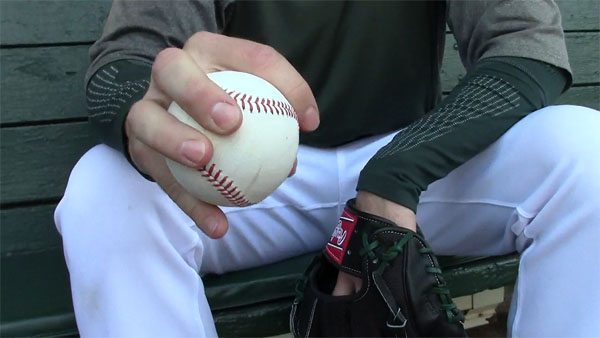
changeoneRECOMMENDATION: Instead of the Circle Change keep it simple. Check out Examining Grips with Dan Straily. He shows several grips which I believe are easier to control and just as effective. Meaning easier to throw for a strike and because of the grip comes in slower.

Remember, “a change is just a fastball with a different grip. Develop a grip you feel comfortable with then throw it like your fastball; same arm speed, same arm slot. If you are having trouble throwing the change consistently for a strike, change your grip.

So what is the real “Purpose of a Change?” To get the hitter to Miss-Hit the ball. 

Until next Blog,

Head Shot for Newsletter Smaller

Al McCormick