Categories
Blog

#MVP | What Will You Do When You Are Told NO?

Many times, we use the word ‘No” in a very positive way; “no two people are the same,” or “heck, you’ll be back in no time,” or even to positively describe another person, “regardless of what you think, Rich is no fool.” Yet many of us are devastated when we hear the word, “NO” when trying out for a Team or applying for a Job.

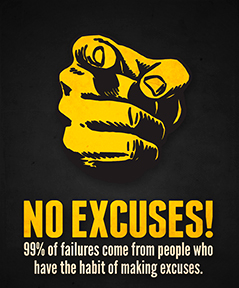
It’s that moment we realize, ‘No’ Is a Complete Sentence [Anne Lamott) and we are faced with a decision; do we make excuses, or do we make changes?

The resolution, is really that simple!

Check out what Misty Copeland did when she was told she has “the wrong body for ballet.” It certainly helps us understand excuses really are for people who don’t want it bad enough. The opposite of Misty Copeland’s make up. The opposite of who became the face of the Under Armour’s powerful advertisement, “I Will What I Want.” Instead of making excuses, Misty Copeland became defined as “a prodigy, a breath of fresh air” during an episode of 60 minutes after being told she had the wrong body for ballet.

The decision is always ours, we just need to answer the question; “How bad do we want it?”

Do we want it as bad as Misty Copeland?

Paraphrasing Ann Lamott’s quote, never give up on your dream will make your yes’ mean more.

Until next Blog,

Al McCormick

Categories
Blog

#MVP | You Made it, Are You Happy?

Happy is defined as a feeling…or showing pleasure

Dan Gilbert, Harvard Psychologist and author of “Stumbling on Happiness” stated the majority of us “…believe it [happiness] is something to be found.” Mentally created by our prefrontal cortex which creates our personality expression, our decision making, and moderates how we interact with others – including ourselves.

That area of the brain we use to mentally/visually experience anything before we actually do! A synthesized version of the truth it what Mr. Gilbert called it. The visual form we use to mentally describe ‘Making It’ and/or being ‘Happy.’  

  • As an athlete we are excited with the beginning of a new season until we are faced with tryouts.
  • In business we envision the new job, the promotion, or winning a difficult opportunity which can be clouded by the interview, someone else selected, or another company wins.

It is our opportunity to Enhance or Destroy the mental picture we generate about what is success, what makes us HAPPY. Yet, as vivid and scary our mental picture of failing is, it is far worse if we win and do nothing with it; make the team, get the job, get the promotion, or win the proposal. Richard St. John describes it as, “…we reach success, and then stop!” 

Deadend

In the end, we begin the process of destroying the success, destroying the happiness we created, only to generate a synthesized happiness, “It was for the best as we never enjoyed playing for them, we never enjoyed working for them, the new position was overrated, and in the end we were doomed from the start. It is our way of transferring blame through a false sense of justification!

Zig Ziglar said,

You were born to win, but to be a winner, you must plan to win, prepare to win, and expect to win.

BE A WINNER and, BE HAPPY!

It really is that simple.

Until next Blog,

Al McCormick

Categories
Blog

#MVP | Do We Really Motivate?

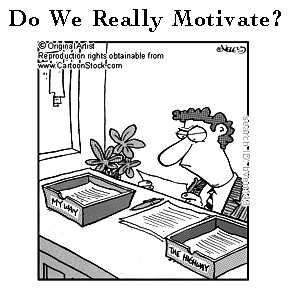
Do we motivate, or…does ‘my way or the highway’ approach seem to always rear it’s ugly head. After all;

  • I did very well in the past
  • When I did, we Won
  • I’ve successfully done it in pressure situations

With all the “I’s” flying around [e.g., I did, When I, I’ve] we can agree on one thing, there is no need to discuss what it takes to be successful because my way or the highway approach is the captain speaking to the passengers. We smell our own perfume and build teams of individuals who think just like us. Surround ourselves with teammates whose only goal is, not getting yelled at. The alternative is being told to take their creativity and move on!

Think about what we lose.

  • Individuality and Creativity is out the window for fear of being yelled at
  • Intuitiveness, Awareness, and Perceptiveness All LOST
  • The Team Concept is non-existent

Richard Branson said, “The worst culture you can ingrain within a business [or in a sport] is in an atmosphere of saying yes to everything.” Sometimes it is hard to believe, but disagreement is critical to finding the right answer, to truly becoming successful.

An accomplishment that is a trait common to successful companies and successful teams. Individually, they are comfortable enough to be intuitive and solve issues as they arise with the goal focused on the overall Successful End-Result. An environment creating Independent thinking teammates.

Creating what doctors describe as Intrinsic Motivation. An environment Edward L. Deci defines as satisfaction of performing the activity itself.” An approach where we motivate from allowing and observing. They believe in and are contributing for themselves, instead of being yelled at.

Everyone on the team is comfortable trying new things with the understanding, failure is the process it takes to get better.

I recommend Daniel Pink’s Seven Factors to enhance Intrinsic Motivation:

  1. Challenge – Internally promote desires to accomplish more through understanding of our role
  2. Curiosity – Become a student of the game/your job and promote a desire to seek ways to perform better
  3. Control – Truly believe we determine how well we want to perform
  4. Fantasy – Create an internal goal – a vision as to where we see ourselves someday
  5. Competition – Create an internal drive and desire to improve
  6. Cooperation – Recognize how doing well benefits the team
  7. Recognition – Seek and accept meaningful, positive recognition for what we have accomplished

Until next Blog may I suggest Intrinsically Motivating,

Al McCormick

Categories
Blog

#MVP | Failing – Let it Go

Babe Ruth said, “Don’t let the fear of striking out hold you back,” yet anyone who has played the game of baseball will agree, striking out can be one of the worst feelings there are in baseball. Not only did you not get a hit, you now have to face your teammates, your fans, and your family on your way back to the dugout.

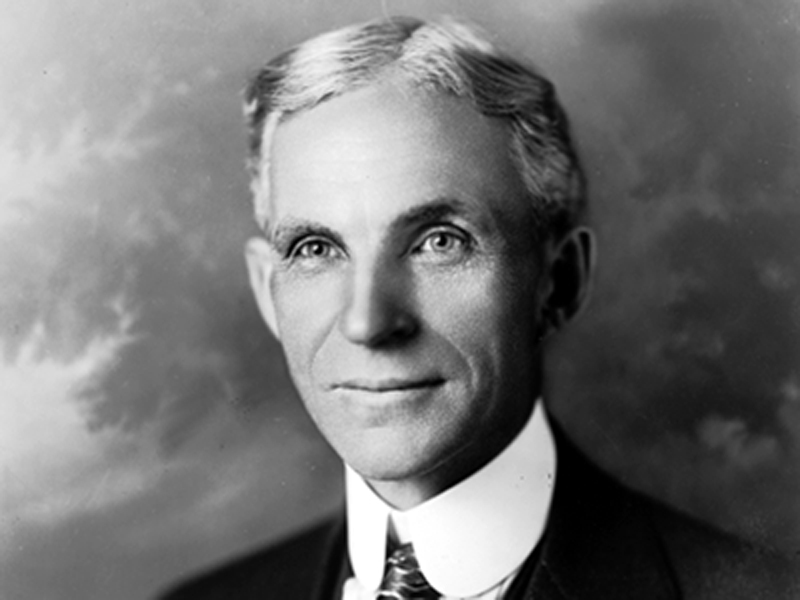
Admit it, when we fail in business or in baseball we refuse to make eye contact with anyone. It hurts!  Even though Henry Ford believed, “Failure is the opportunity to begin again more intelligently,” for many of us tantrums is our normal reaction.

Calvin Tantrum

Show me a player or a business person who throws good tantrums, and I’ll show you a person who fails and transfers blame A LOT.  I don’t know about you but beating up on an innocent water jug or blaming a boss or a company is not an individual who is “…beginning again more intelligently.”

One thing is certain, mistakes don’t disappear on their own; we need to recognize the hiccup, find out where we messed up, then improve. Improve by mentally fixing, mentally telling ‘our self‘ what to do; then make a change. Once you change, forget the hiccup, just Let it Go!

Harrumph…I leave you with my granddaughters favorite song,

Musical Notes Let it Go…., Let it Go…screwing up doesn’t matter anyway…

Until next Blog,

Develop success from failures. Discouragement and Failure are two of the surest stepping stones to success.

Dale Carnegie

Head Shot for Newsletter Smaller

Al McCormick

Categories
Blog

#MVP | Lack of Ability or Commitment?

“Most people who fail in their dream fail

not from lack of ability but from lack of commitment.”

~ Zig Ziglar

Think how often many of us change jobs, how often athletes changes teams? The dictionary defines Commitment as “A willingness to give your time and energy to something that you believe in,” while Doctor Heidi Reeder expands the definition to “Commitment is the foundation of Great Accomplishments.

Could the lack of employee/employer commitment obstruct the desire to improve; prevent us from applying extra effort? We have all witnessed, maybe event participated, in blaming Coaches, Bosses, Teams and/or Companies for our lack of improvement. To prevent this from happening we need to ask the question, So whose at fault?

I think the answer is pretty clear, We Are! 

HowCommitted

  • We decide when, and in what areas we want to improve
  • We decide when and in what areas we want believe in

Therefore, we decide When, Where, and On-What we want to Apply Extra Effort. Being honest with ourselves we are in Control and Determine OUR Level of Commitment.

Unfortunately, as this chart of an earlier Gallup Poll indicates, most of us really don’t care. Whatever our excuse, the chart is very clear, 63% of us go through the motion in our job or the sport we play versus working hard. That means “63% of us are contented with mediocrity!”

Like it or not, Zig Ziglar is correct; we fail, not from lack of ability, but from Our OWN lack of commitment. It’s a choice that we make. Tony Robbins defines this decision as a mental conflict; a mental battle between “Pain versus Pleasure.” 63% of us mentally believe:

  • The Pain of Getting Better [e.g., effort we need to put in] is TOO Much and Outweighs
  • The Pleasure of Doing Nothing [e.g., doing the same way we did it yesterday]

Business and Baseball are very similar. In both we are judged individually while participating in a Team environment and Lou Piniella, explaining what it takes to make it in professional baseball, may have provided the best definition of Commitment;

“You have to learn how to get comfortable with being uncomfortable.

Until next Blog know this; “If you don’t change anything, then nothing changes!”

Al McCormick

Categories
Blog

#MVP | You Want Cheese With That Whine?

So, when things don’t go our way, what do we do?

Whining

  • How do we react when we don’t win the bid?
  • How do we react when the Umpire rings us up on a bad pitch?
  • Who do we blame when a Company decides to work with someone else?
  • Or, you don’t even get a chance. The Coach doesn’t put you in line-up or your boss gives the opportunity to someone else

Accept it, whether in a baseball game, in business, or life in general, there are a million hiccups that can occur. The real question is, ‘are you prepared; are you ready?

We all know it’s easy to transfer blame, to be an arm chair coach, but I never met a successful person who said, ‘I wait until the last minute to get ready.‘ They also view failure as an opportunity to improve. Glenn Moore, author of Successful Guide for Athletes stated, “Dramatic changes can be made in your attitude once you admit to yourself that the problem you are facing will pass.” That is, provided we, like successful people, are not afraid, stop whining, and are willing to admit we have a problem. Whining actually prolongs our issue by refusing to admit the problem is ours and masks it by finding fault in someone or something else.  

STOP WHINING! Then and only then we can resolve ANY ISSUE.

Whining-Stop

Because it’s how we deal with the fear, the FEAR associated with failure that determines whether we are mediocre or great. So let me introduce Glen Moore’s ‘Yes, but….’ theory.

The Yes, But… Theory

The “yes, but…” theory is something we learned at an early age, we tended to use it incorrectly. We never really took the time to understand the power of what we were saying, so it should not be a surprise we didn’t have a clue of the purpose of ‘yes, but…’ or who its purpose. Early attempts combined ‘yes, but’ with Whining in an attempt to make our parents change their mind.

Bobby is a year younger then me, but his parent’s are letting him go.

Failing to recognize the TRUE Power of the three letter conjunction, but!

“Yes:” identifies and admits the problem exists and in almost a Zen feeling the false FEAR we created in our mind disappears. Providing a clear view to what we need to change, what we need to do to correct our hiccup. Then by adding the word “but…:” eliminates the self-made fear simply by narrowing the focus of the problem to what the true hiccup really is. Stopping our fear in its track, 

  • Yes, I botched that opportunity, but when I truly spend time and become fully prepared I answer the mail and win the bid!
  • Yes, that last pitch was outside, but I was right on him for the first two strikes, and I am seeing his pitches real well. I’ll get a hit next time.
  • Yes, they teamed with another company for that last opportunity, but I realize I waited too long before approaching them.
  •  Yes, I am not in the lineup, but I have worked hard and when I get my chance I am going to make it very difficult for the coach to not play me.

Click Here if you would like the weekly blog sent to your email.

Until next blog,

Al McCormick

Categories
Blog

#MVP | “It’s Just Like Riding a Bike,” Sounds Like Complacency To Me!

How many times have you heard “it’s like riding a bike, once you have done it, you never forget?” It is a comforting thought, but other than the fact your brain draws on what it’s been taught, my worry is that we never fully understand what we have been taught. We are just happy with the fact we are able to stay balanced. No idea why, Just Happy!  Psychologists define this place where information is stored so it can be retrieved easily as Declarative Memory.

  • After a series of trial and error [e.g., scratched knees], the right way to ride a bike is stored in your brain. Don’t do it right and you fall!

Unfortunately we have limited ourselves, if we never actually understood what we have learned and are happy with what we have stored in our Declarative Memory. In business and in sports this contentment is a form of complacency. We are strictly being happy with the Outcome with any idea of the Actions it took to get the results we are looking for. Obviously not falling and scratching our knees is comforting when it comes to riding a bike, but what if the knowledge we were given was incorrect. Hitting a baseball is a perfect example.

  • I personally believe hitting is just as simple as riding a bikebut if you jotted down all the variations coaches are blurting out (e.g., wait longer, take it the other way, shorten your swing; many contradictory) it is no wonder we fail. Rather than understand what it takes to hit, we allow our Declarative Memory to be filled with fallacies and preventing us from truly understand the actions to hit a baseball.

Image for a second if we are learning to ride a bike for the first time, and every family member is flooding us with as many instructions a hitter receives the moment we step into the batter’s box. If this was the case, I am not so sure I would have ever learned how to ride a bike.

  • Keep your eyes on the baseball
  • Keep front shoulder closed
  • Relax the front elbow. Relax the back elbow
  • Weight on your back foot with slight bend in both knees
  • Keep a firm front side
  • Keep your head in the middle of your body
  • Swing Palm up, Palm Down

The lesson learned: Whether we are attempting to write a winning proposal, trying to hit a baseball, or ride a bike, take a few minutes to UNDERSTAND what we are trying to accomplish!

Check out Smarter Every Day’s “Backwards Brain Bicycle.”

Until next Blog,

Al McCormick

Categories
Blog

#MVP | You’re Kidding Me…Action Video Games improves Perception, Attention, Cognition, …and Vision!

As an adult, even more so as a parent, you may want to sit down for what I am about to discuss.

“Action Video Games improves Perception, Attention, Cognition, …and Vision!”

What…? A subject that has created so many heated debates, just saying what appears to be self-contradictory words, “The benefits of Action Video Games,” makes us feel a bit uneasy.

Mom

….Oh my?

But that is exactly what Cognitive Research -Professor at the University of Geneva Studies Cognitive Neuroscience Daphne Bavelier stated. She even went on to say it will make you SMARTER, BETTER, FASTER, and STRONGER.

When you realize the average Action Video Gamer is 33 and todays neuroscientist are using action video games to help the elderly improve their reaction and improve their peripheral vision.

Contrary to what you maybe thinking, playing Action Video Games actually improves your vision, positively affects your decision making, increasing your ability to be a multi-media-tasker.

  • Contrast sensitivity – “…even those with normal visual acuity could improve their ability to detect contrast and make sense of visual clutter by playing action video games.”
  •  Visual Acuity – According to Jay Pratt, professor at the University of Toronto stated, “Video gamers pick up very subtle, statistical irregularities in environments
  • Improve reaction time – Able to “detect new information coming at them faster,” therefore becoming more efficient – more effective.

True Success as an athlete or in business we all need to increase our ‘multi-media-tasker ability.’ Our ability to focus on relevant visual information,” as Rick Nauert, PHD stated, thereby increasing our knowledge and understanding by focusing on what it takes to improve, what it takes to be better than the next company or individual, what it takes to win!

Former first round pick by the Los Angeles Dodger and businessman Shawn Green said, “… those in professions that demand ‘super-normal’ visual attention, … would benefit enormously from enhanced visual attention….[to keep ahead of the competition!]” Icing on the cake, Ms. Bavelier’s studies even proved, “intense retraining of the … eye in the context of high action video games can improve acuity regardless of age.”

So as Steve Jobs said, “…[mistakes]…admit them quickly, and get on with improving…”

Until next blog you might be asking yourself, “how many hours should we play?” Perhaps the best answer is an old adage my grandmother told me, or was it the Greek poet Hesiod (c700 bc), “observe due measure; moderation is best in all things.” 

Interested in receiving my blog automatically! Click Here 

So, I will see you on line…,

Al McCormick
Categories
Blog

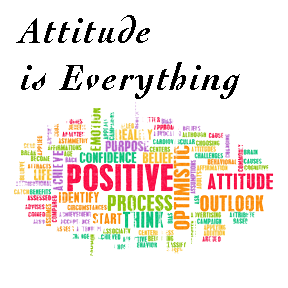
#MVP | Attitude is Everything, But You Get To Choose

Today’s social media may lead you to believe the only attitude is a negative one. Yet I believe for every aggressive, selfish athlete or employee there is a self-disciplined one. One who is committed to performing at the highest level while doing the right thing.

Since SUCCESS is Relative, I argue the one who is confident in who they are and comfortable seeking answers to what they don’t know, it is easy for me to state, ‘I believe they are the successful ones.’ Attitude determines our success and establishes whether we accomplish what we need to and what we want to!

What is GREAT, we get to choose our Attitude, our approach, and identify what it is we believe is important to us. It’s our own internal prescription where we mentally decide which direction we want to take to be successful in business or in sports. In fact, a Common Trait of successful individuals in Business and/or Athletics is a Positive Attitude. They stay mentally focused on what it takes to reach their full potential [e.g., technique and approach] versus wasting time worrying about things out of their control.

Attitude is the success remedy to:

  • Remain Motivated
  • Stay Hard Working
  • Persevere – Not afraid of Change and willing to Take Chances

Even the numbers bear this out. Using the table below substitute a number for each letter [e.g., A=1, B=2…], and we find out just how important the word Attitude is in defining whether we are successful or not.

alphabet

Attitude = 1+20+20+9+20+21+4+5 = 100 

Although not surprised, I do find it amazing that one word, ATTITUDE, has that much of an impact in whatever we find successful. Maybe it’s time for some Jimmy Buffett…”Changes in Attitudes…” and we too can become successful in business or in sports! 

Until next blog, in fact, always, the choice is OURS!

Al McCormick


Categories
Blog

#MVP | So…. You’re Telling Me There’s a Chance?

Henry Ford (1863-1947) said, “If you think you can do a thing, or you think you can’t do a thing, YOUR Right!” 

Simply put, when we struggle with something, we tend to let our emotions take over worrying about failing; ‘I can’t hit a curve ball,’ or ‘I’ll never get this proposal done.’ Instead we need to stop and think of what we are trying do versus worrying out the results. In kind of a Zen Moment, we will soon realize we overcomplicated what we wanted to do and change our approach to focusing on the actions it takes to accomplish the task at hand.

We are just obscuring our goals with emotion versus lack of knowledge.

It really is that simple!

Let me recommend Dr. John Kotter’s, “8-Step Process for Leading Change.” as an effective way to help organize our approach to improving while providing a useful technique to help refine our goal(s).

  • CREATE a Sense of Urgency in wanting to win
  • BUILD an Alliance by capitalizing on strategic tasks
  • FORM a Strategic Vision – Own it!
  • ENLIST a Group – Bounce the approach off someone with the Similar Vision
  • ENABLE Actions to take – We know what needs to be done, so Just DO it!
  • GENERATE Short Term Wins for each TASK along the way
  • SUSTAIN Acceleration just by accepting each victory and moving to the next TASK
  • INSTITUTE the NEW Changes with each VICTORY

Whether we are down 3 games to 1 in the World Series, or we feel as though we are the only ones who wants to win this Opportunity, There’s Always a Chance!

Until next blog Start believing you CAN,

Al McCormick